Tripoli Public Transport Master Plan
Tripoli, Libya

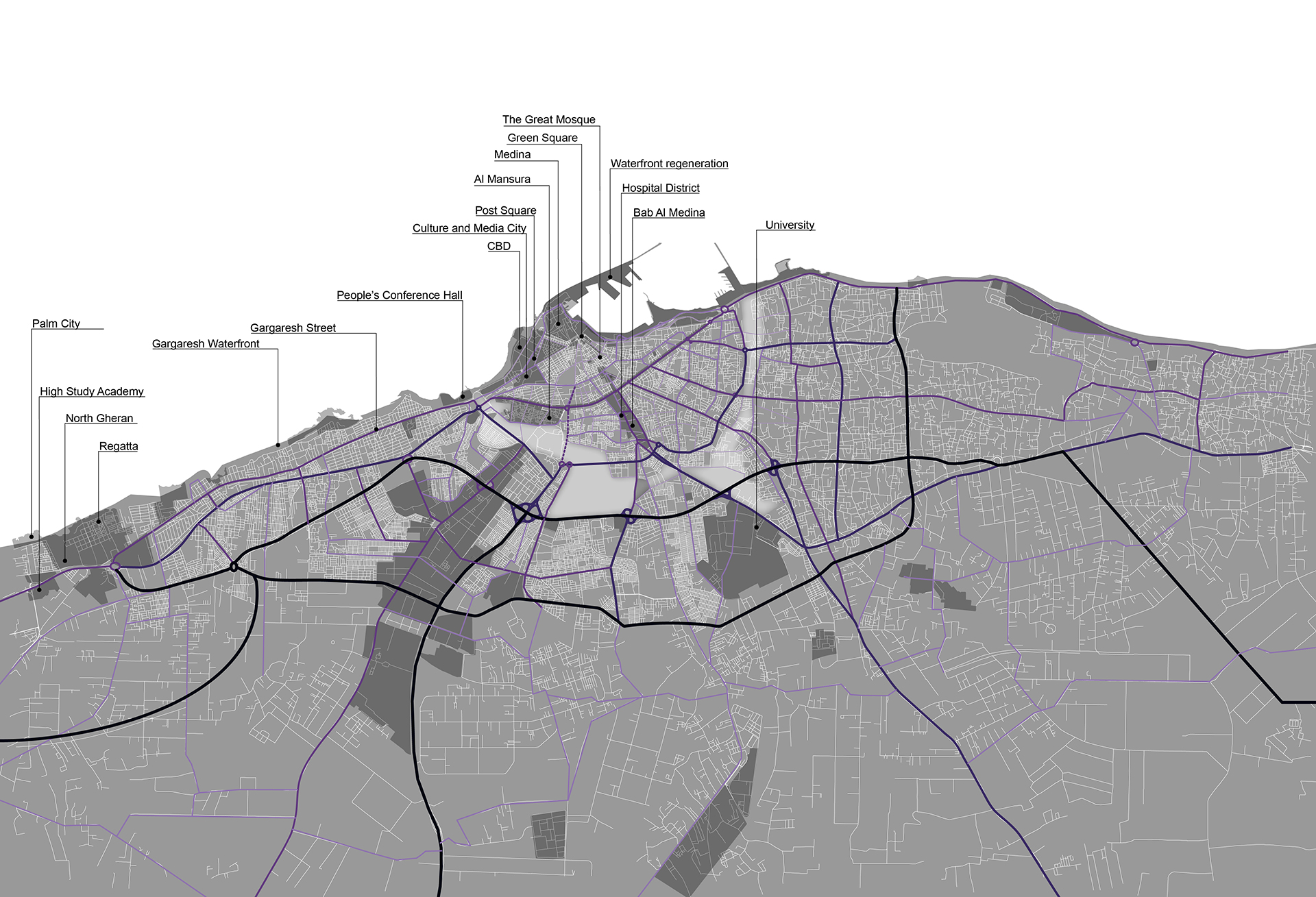
In November 2010, the Tripoli Urban Planning Commission highlighted the issue of traffic congestion on the capital's road network and the need to accelerate the implementation of Tripoli's first public transport system.
MIC-HUB was appointed to produce a study on the development of a strategy for implementing the first public transport system in Tripoli, the capital of Libya.
With 1.1 million inhabitants, Tripoli was a fast-growing and vibrant North African business centre. However, the chaotic urban growth and lack of planning processes in recent decades had created a congested and clogged city environment.
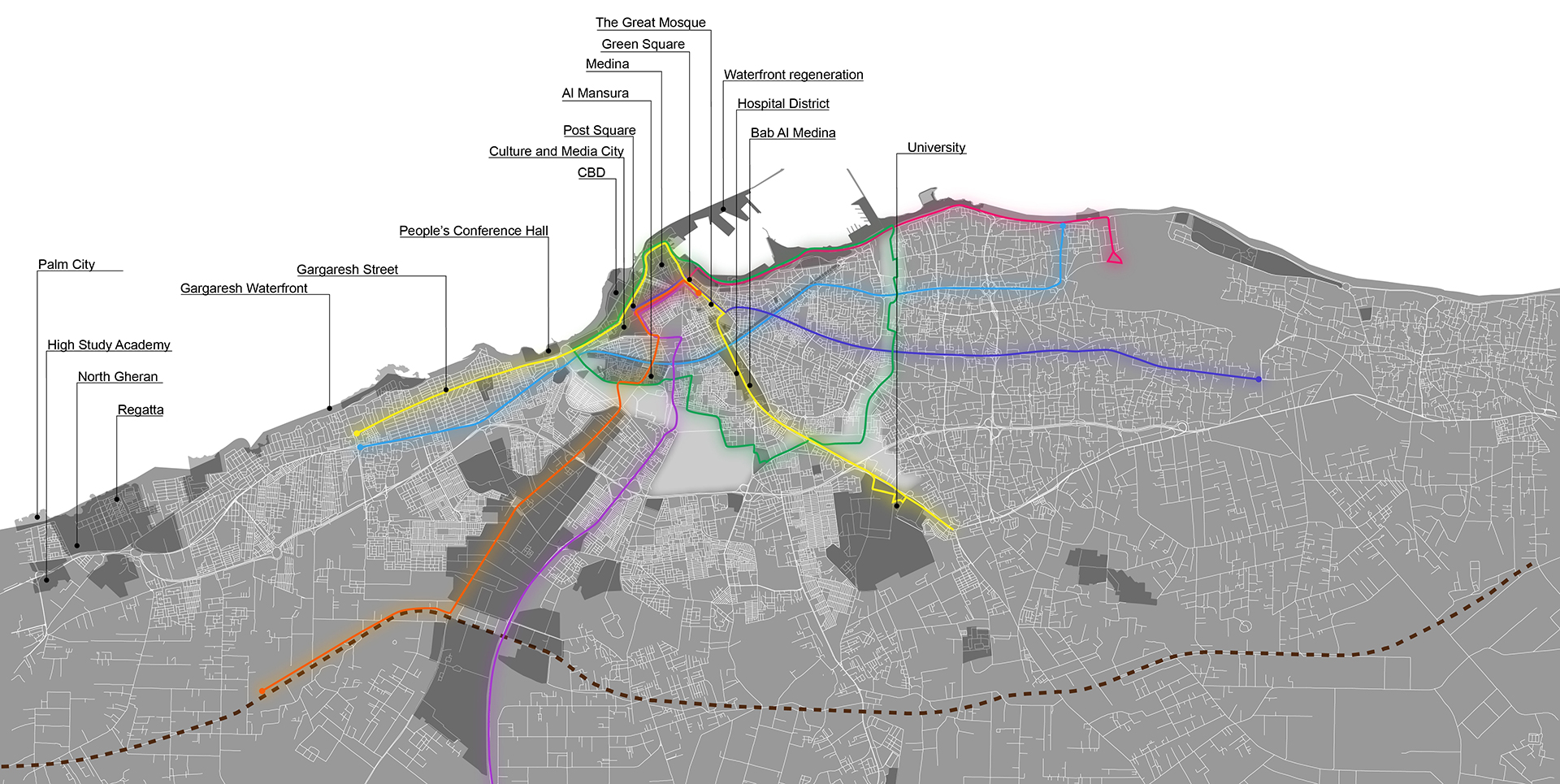
MIC-HUB was commissioned to develop a Bus Rapid Transit (BRT) masterplan. This involved creating five BRT lines and several feeder lines. The study included a detailed masterplan for the first pilot line.
Location
Tripoli, Libya
Client
ECOU Engineer Consulting Office For Utilities
Main expertise
Public Transport Consultancy; Regional & Urban Transport Planning
PROJECT HIGHLIGHTS
- Bus Rapid Transit masterplan, involving five BRT lines and several feeder lines
- Detailed masterplan for the first pilot line
Project gallery
Our contribution
The activities undertaken by MIC-HUB to prepare the prefeasibility study were structured around the following tasks:
Collection and review of all existing mobility and transportation studies previously developed for the area, in order to establish a solid knowledge base and identify the main planning assumptions, constraints and opportunities.
Identification and assessment of a set of proposed routes both inside and outside the Tripoli Green Belt. The proposed corridors, together with the related transport technologies, were analysed through a technical review process. A multicriteria analysis was then carried out to evaluate the main characteristics, strengths and limitations of the proposed public transport systems.
An on-site survey was conducted to assess the feasibility of the proposed lines in relation to the physical, functional and infrastructural conditions of the study area. The survey focused on:
• road sections
• traffic data and field surveys
• land use patterns in proximity to the proposed lines
• existing utilities and infrastructure constraints
A benchmark analysis of available transport technologies was carried out to identify the most suitable options for the local context, supporting the development of efficient, feasible and context-responsive mobility solutions.
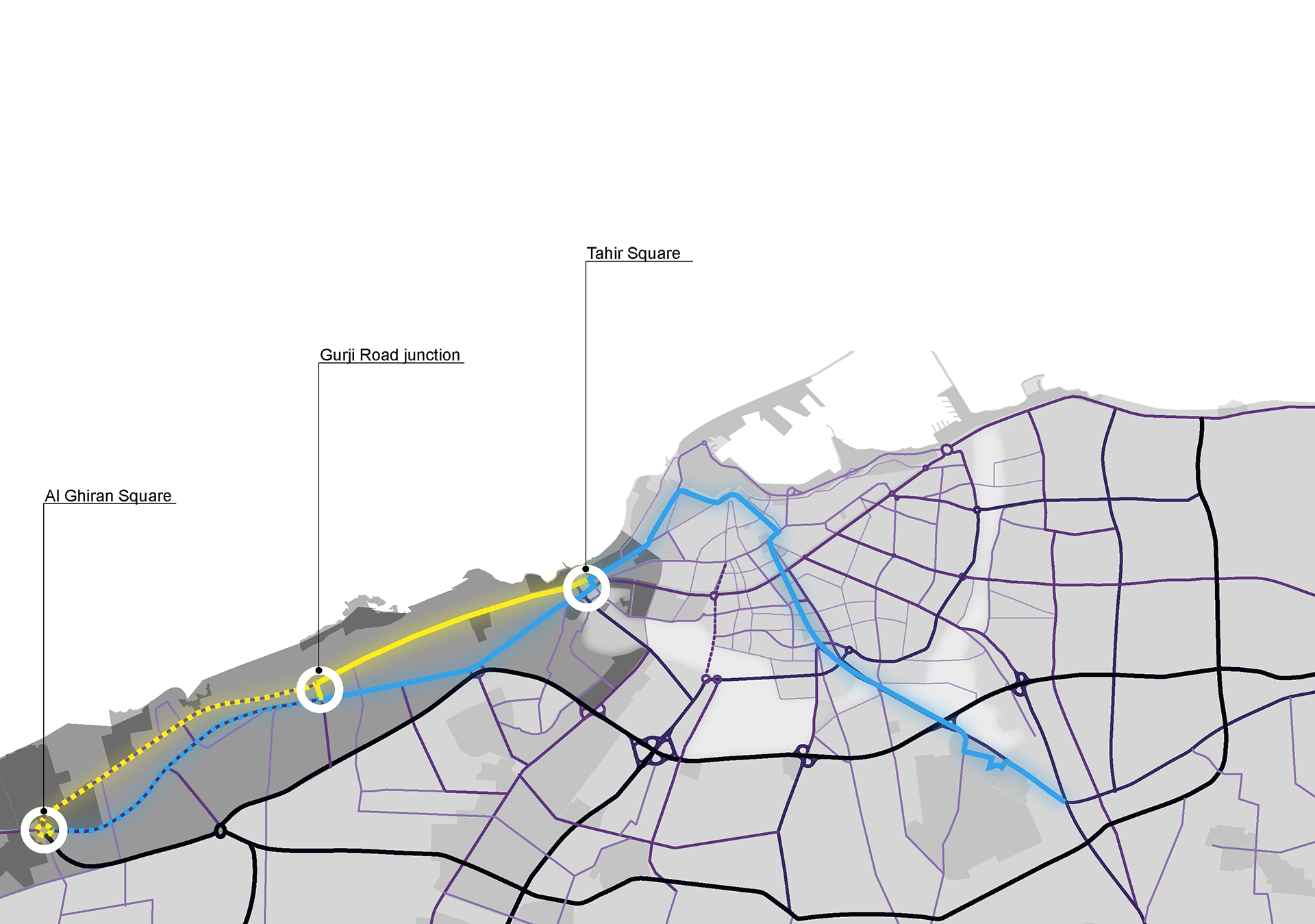
Based on a geometric assessment and Tripoli’s main urban expansion directions, the study of the Pilot Line emphasised the importance of an east-west route for connecting the city centre with its main squares.
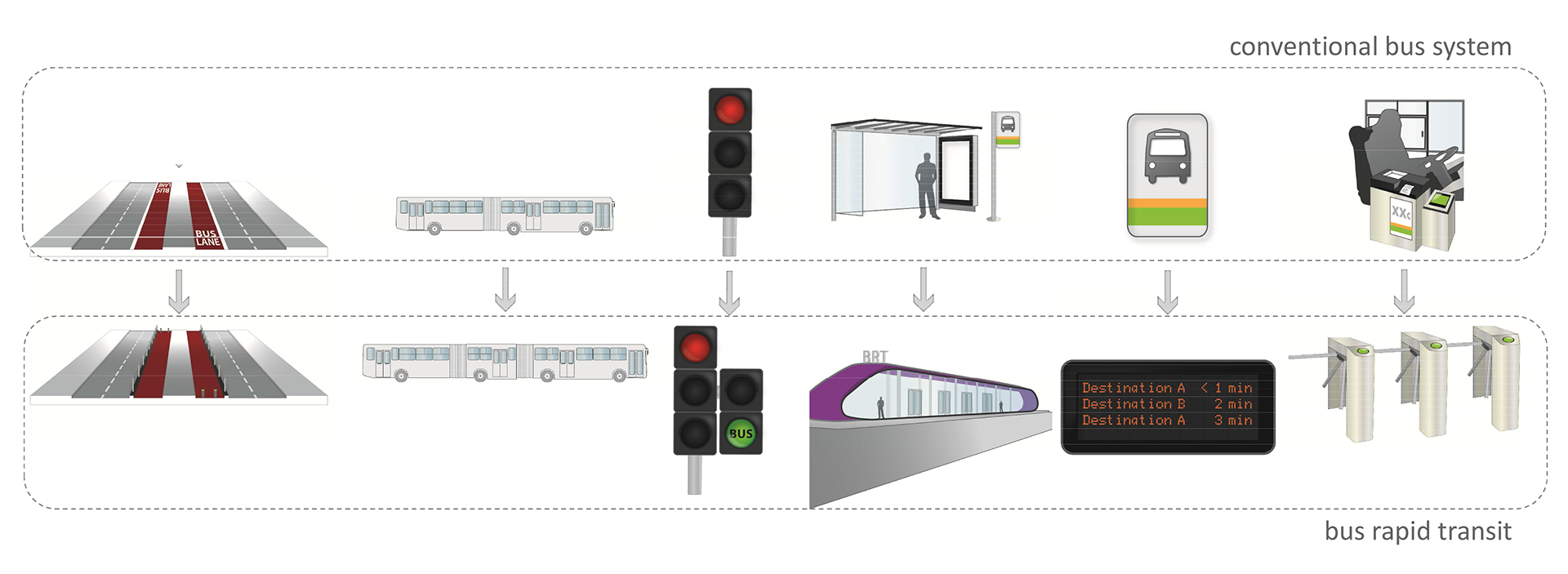
The Pilot Line was designed to be an innovative public transport system offering zero-emission connections. It included advance ticket sales, dedicated lanes and a priority system to ensure efficient public transport.