Parking study for the Bari BRT
Bari, Italy

The Bus Rapid Transit (BRT) system designed by the City of Bari significantly enhances local public transport, integrating high-frequency lines with existing mobility infrastructure.
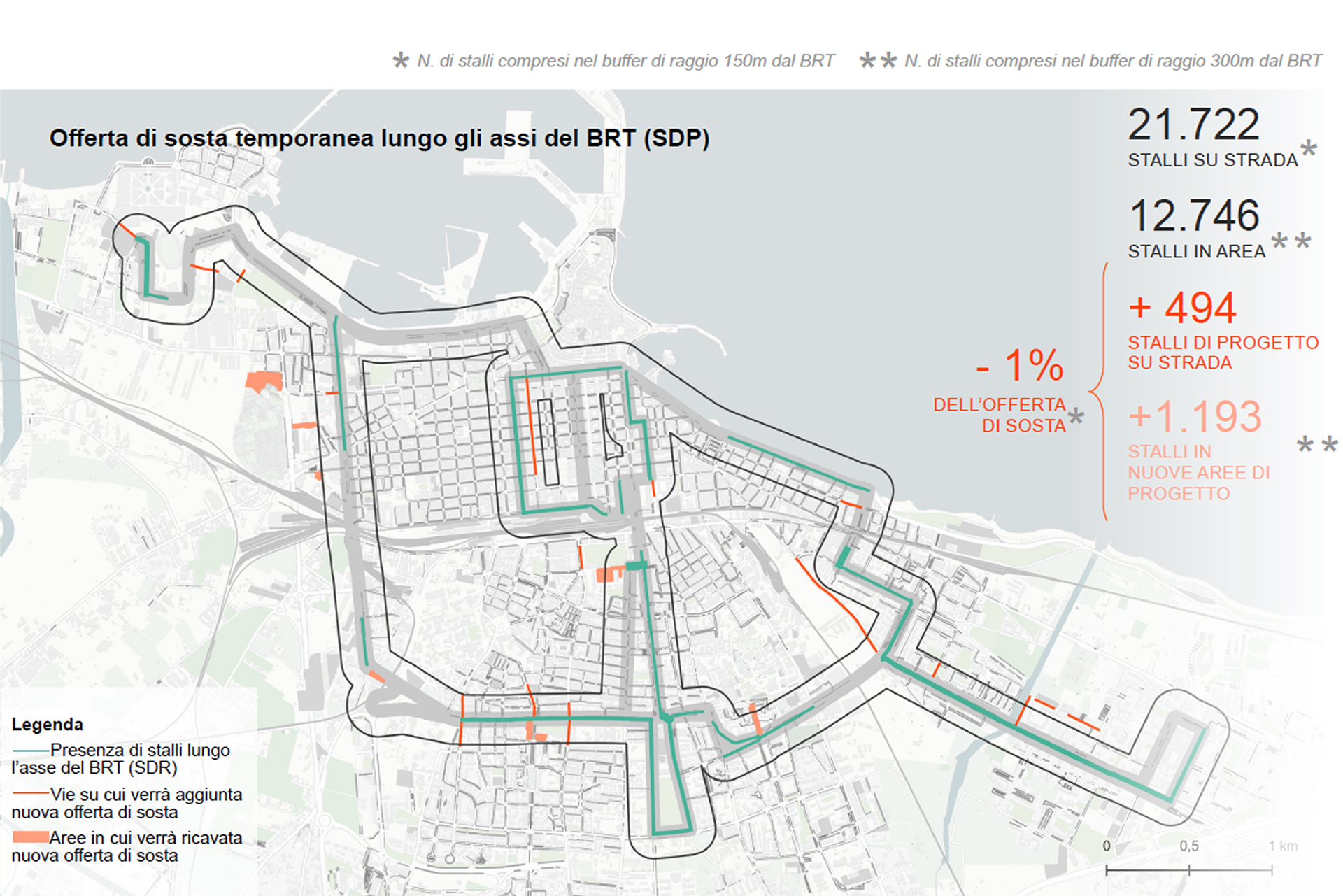
MIC-HUB’s parking study assessed the impact of the BRT implementation on on-street and off-street parking in areas adjacent to the project corridors. The aim is to mitigate the temporary reduction in parking, particularly during the construction phase.
The analysis considered population density, urban attractors, pedestrian and vehicular accessibility, and existing parking distribution, distinguishing between regulated and non-regulated spaces. Temporary parking scenarios were evaluated along the main corridors and adjacent areas, identifying interventions on streets and in underused or disused areas to temporarily compensate for lost spaces and maintain urban mobility during the transition.
The study integrated official, open-source, and BRT project data, providing an operational framework for short-term parking management ahead of service activation.
Location
Bari, Italy
Client
Parking study for the Bari BRT
Main expertise
Strategic Advisory on Transport & Accessibility; Parking Consultancy
PROJECT HIGHLIGHTS
- Current on-street parking supply: 23,178 spaces
- Parking spaces lost due to BRT: 1,950 spaces (-8% of on-street supply)
- Spaces recovered via temporary parking: 494 on-street, 1,193 in new areas
- Intervention buffer: 150 m along the BRT corridor, covering 17 project areas
Project gallery
-
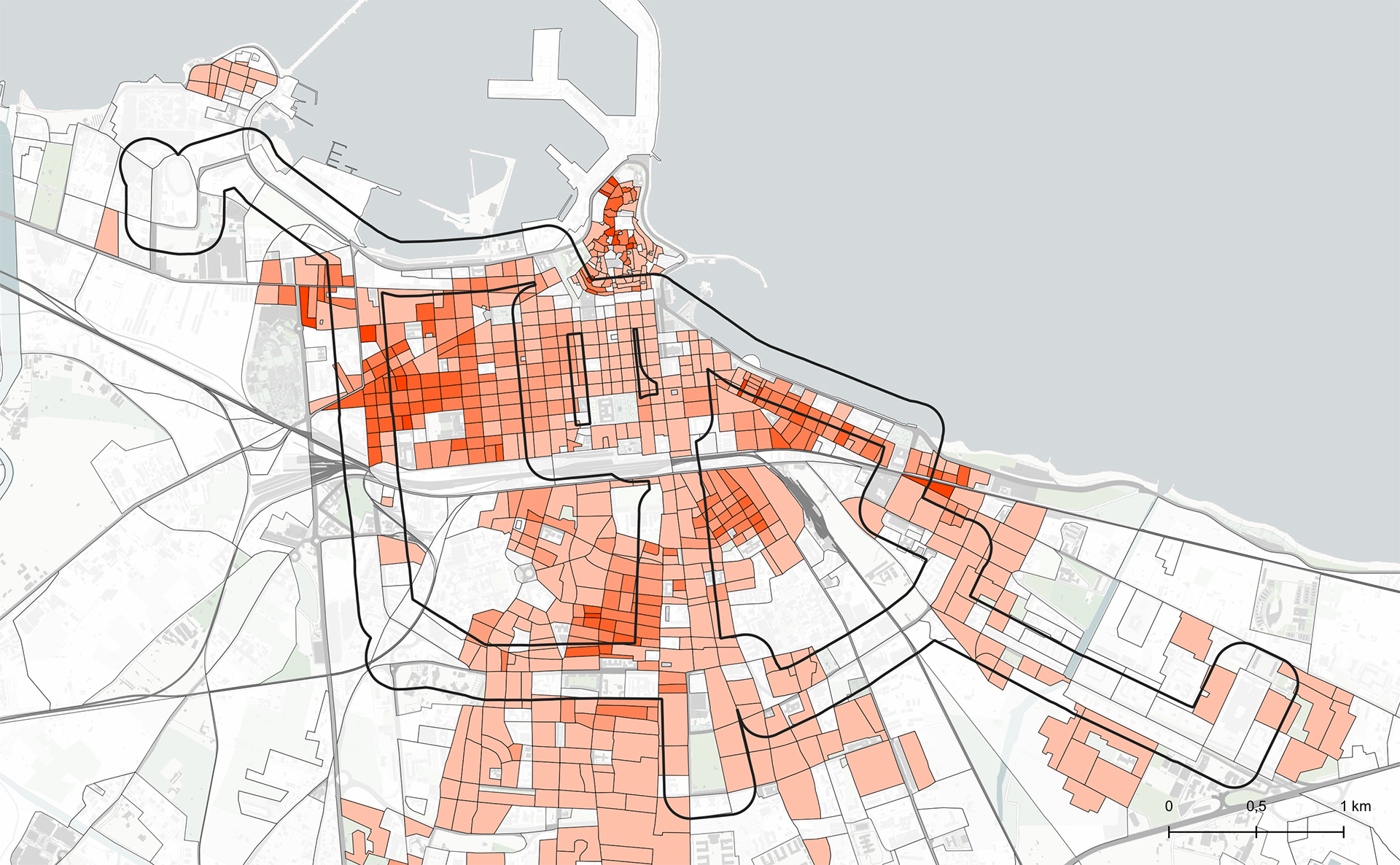
Population density in the study area
-
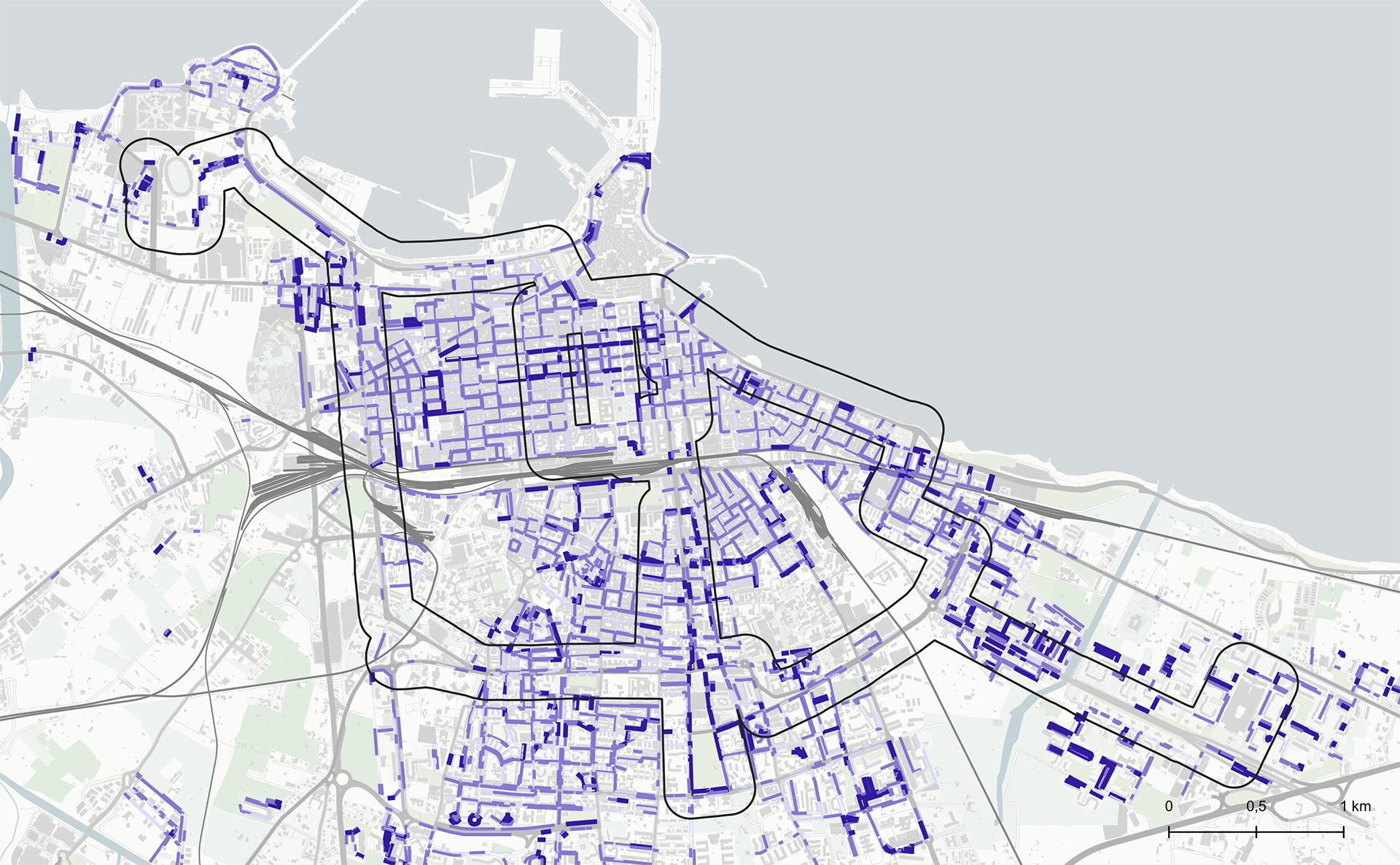
On-street parking provision in the project area: parking density per road section
-
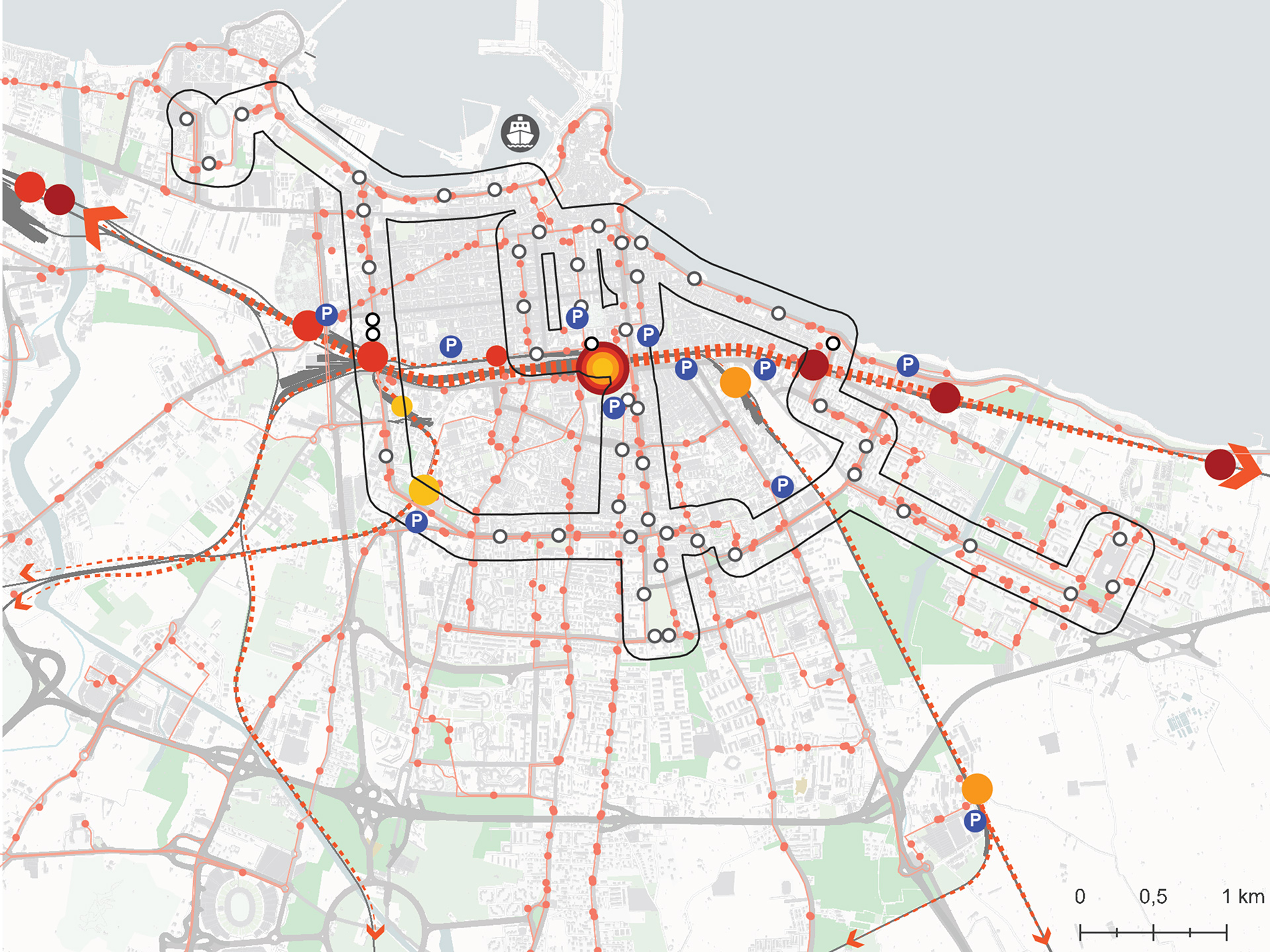
Analysis of current public transport systems and future BRT stops
-
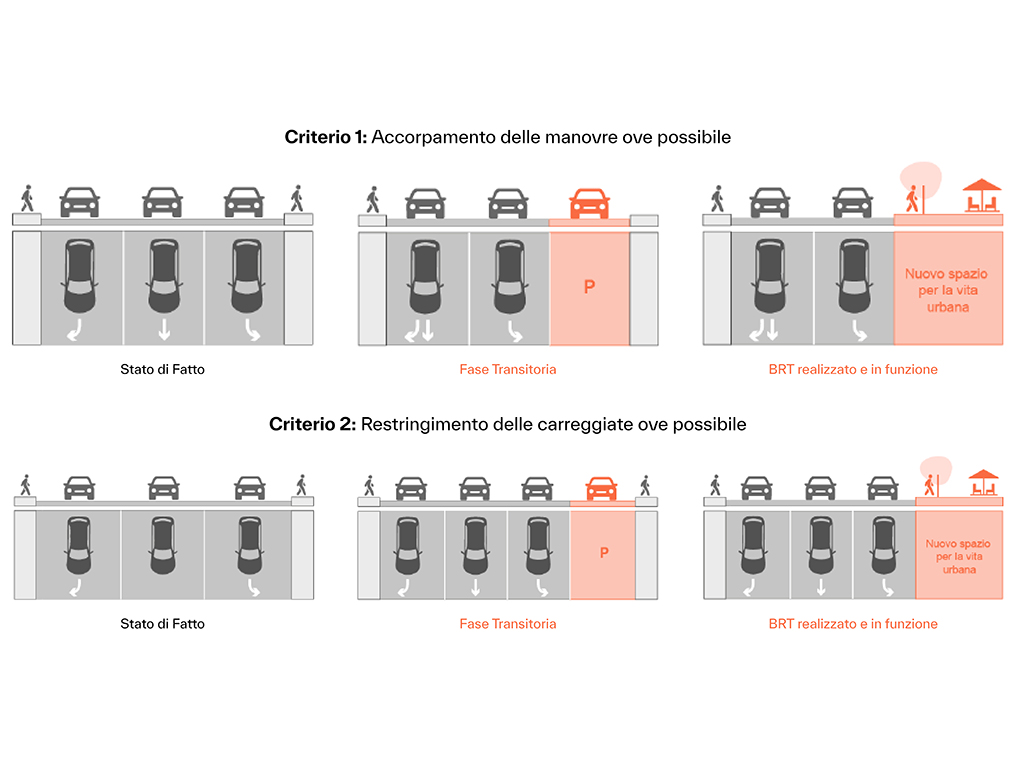
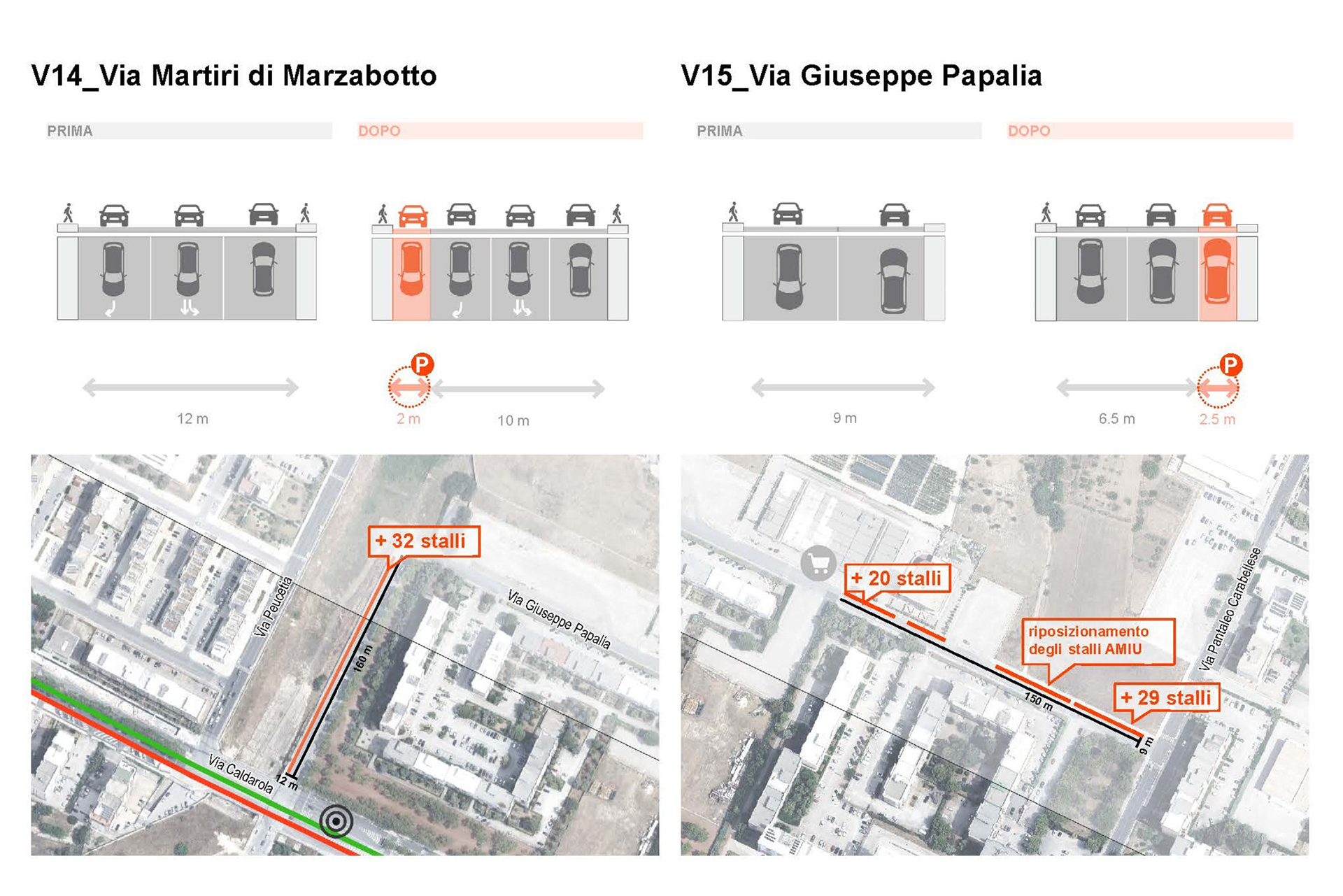
Typological sections illustrating the design principles
-
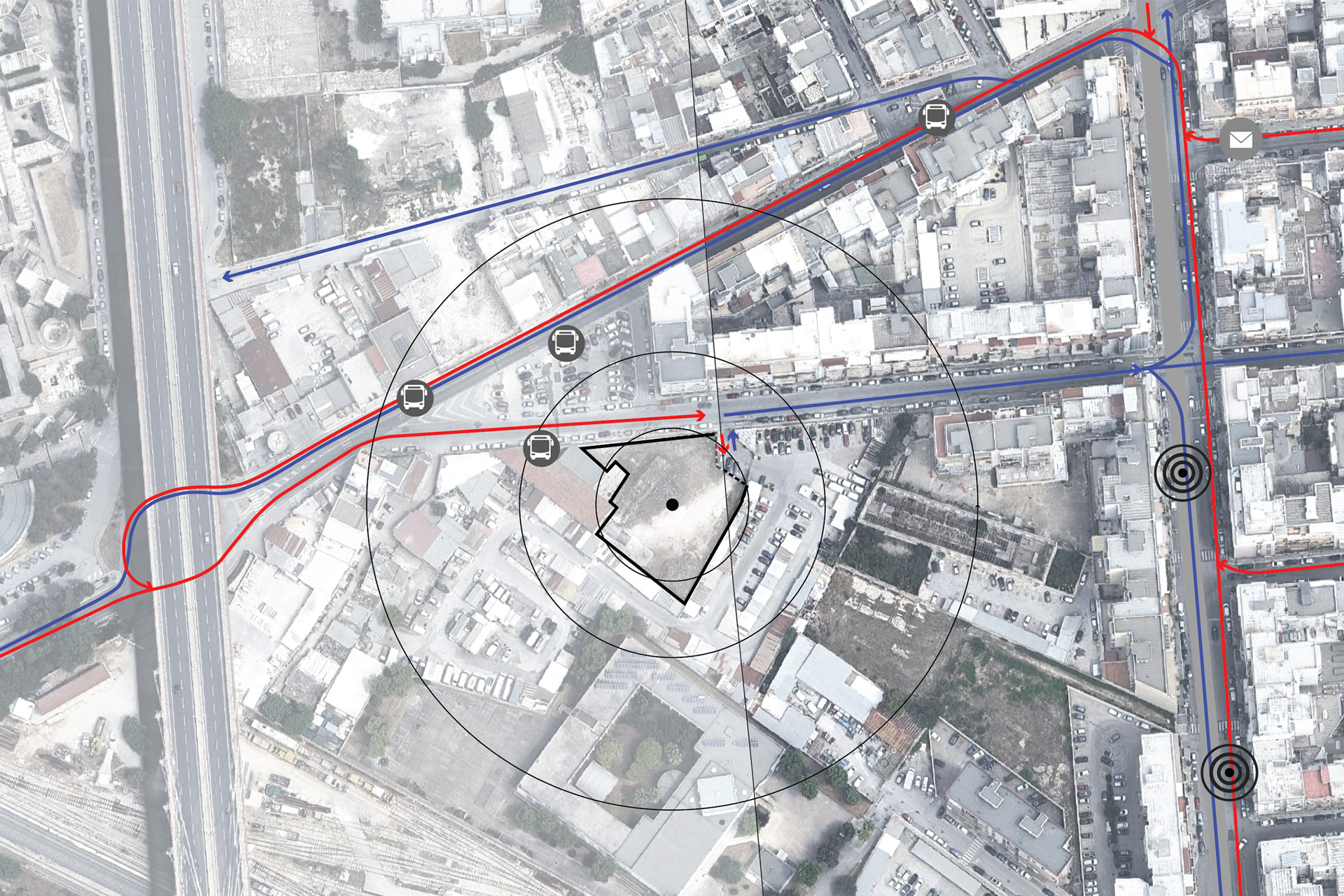
Example of a project relating to parking in a designated area: accessibility
Our contribution
MIC-HUB assisted the City of Bari in establishing temporary parking arrangements by developing design criteria for interventions on streets and in underused or disused areas, and optimising urban space usage without compromising mobility.
Analyses assessed the impact of the temporary loss of parking spaces along BRT corridors and validated design choices. The team defined guidelines for temporary parking design, including typologies and geometries of parking spaces, as well as pedestrian and cycling routes. Best practices for traffic calming, parking safety and multimodal mobility integration were also defined.
Priority areas for temporary parking near urban attractors and BRT stops were identified, and sustainable and reversible solutions defined, ensuring that spaces can evolve into high-quality urban areas once the BRT is operational.