Pedestrian Simulation for Venice Airport
Venice, Italy
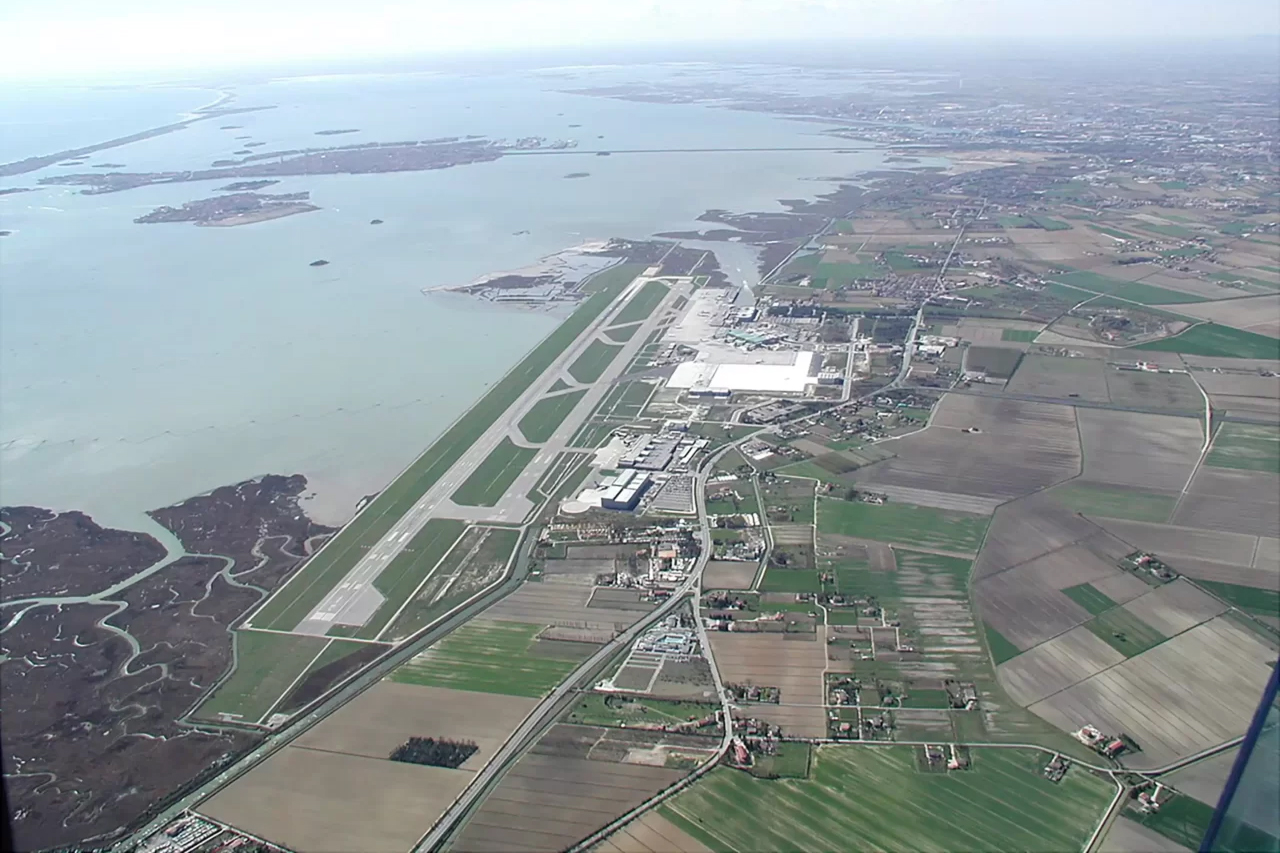
For the 2024 terminal layout of Venice Airport, designed by Oneworks, MIC-HUB delivered a comprehensive pedestrian simulation study to support detailed design and capacity verification.
The project involved the development of a pedestrian dynamics simulation model to assess the terminal’s overall performance under forecasted peak-hour traffic demand. The analysis enabled a comparative evaluation of key airport subsystems to ensure operational efficiency and compliance with required Levels of Service (LOS).
The approach adopted ensured alignment between spatial configuration, operational processes, and the quality standards required for passenger terminal operations.
Location
Venice, Italy
Client
Oneworks
Main expertise
Pedestrian Modelling
PROJECT HIGHLIGHTS
- Dynamic pedestrian simulation of the airport terminal to study how people move and interact within the space, as well as any issues affecting its usability, such as congestion and queues
- Study to enhance the passenger experience
- Analisi dei Livelli di Servizio (LOS), dei livelli di affollamento e di utilizzo dello spazio per i flussi pedonali
Project gallery
Our contribution
MIC-HUB developed a hypothetical peak-time flight schedule, constructed a simulation model, and performed a functional analysis of critical areas, including boarding gates, passport control and X-ray security checkpoints.
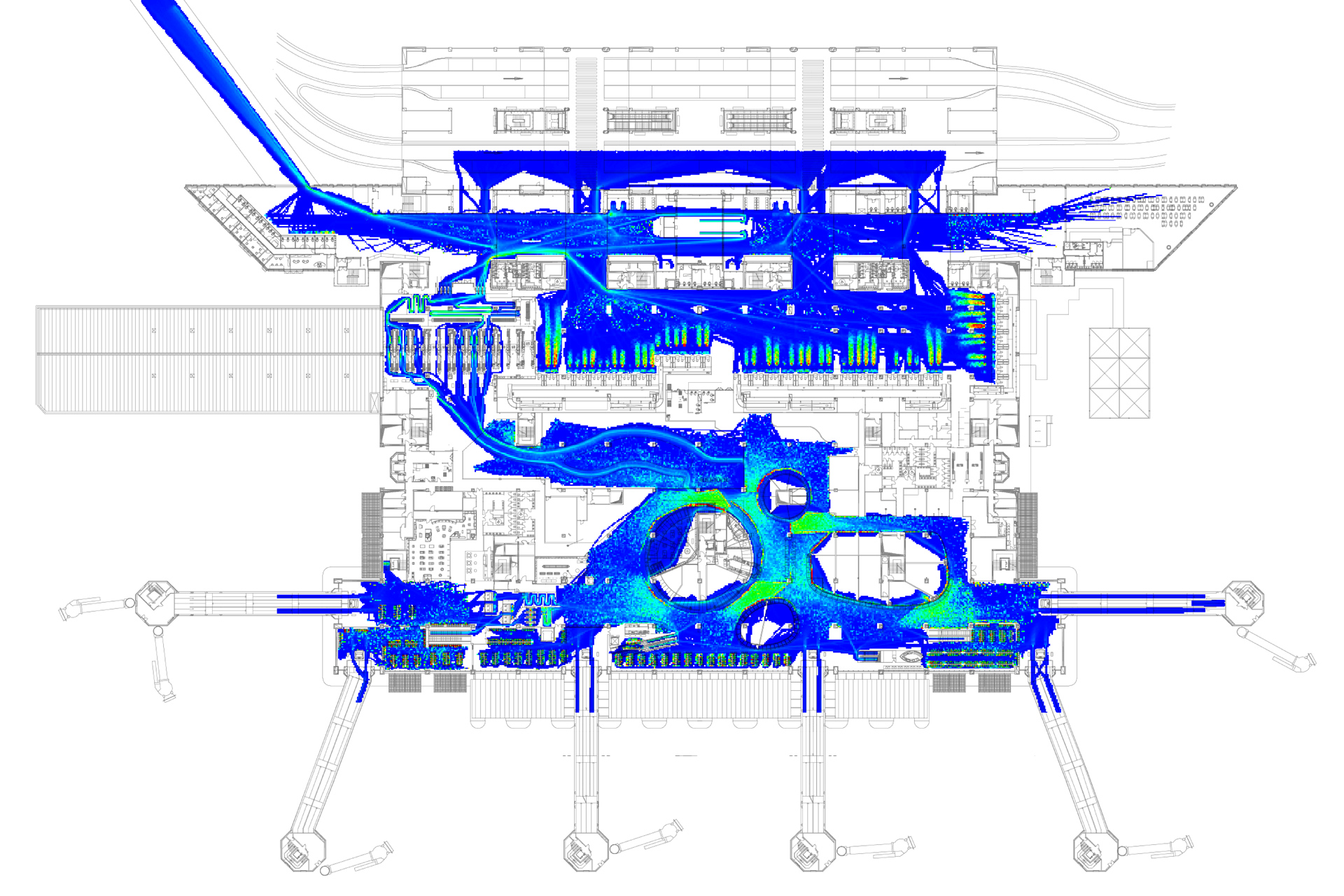
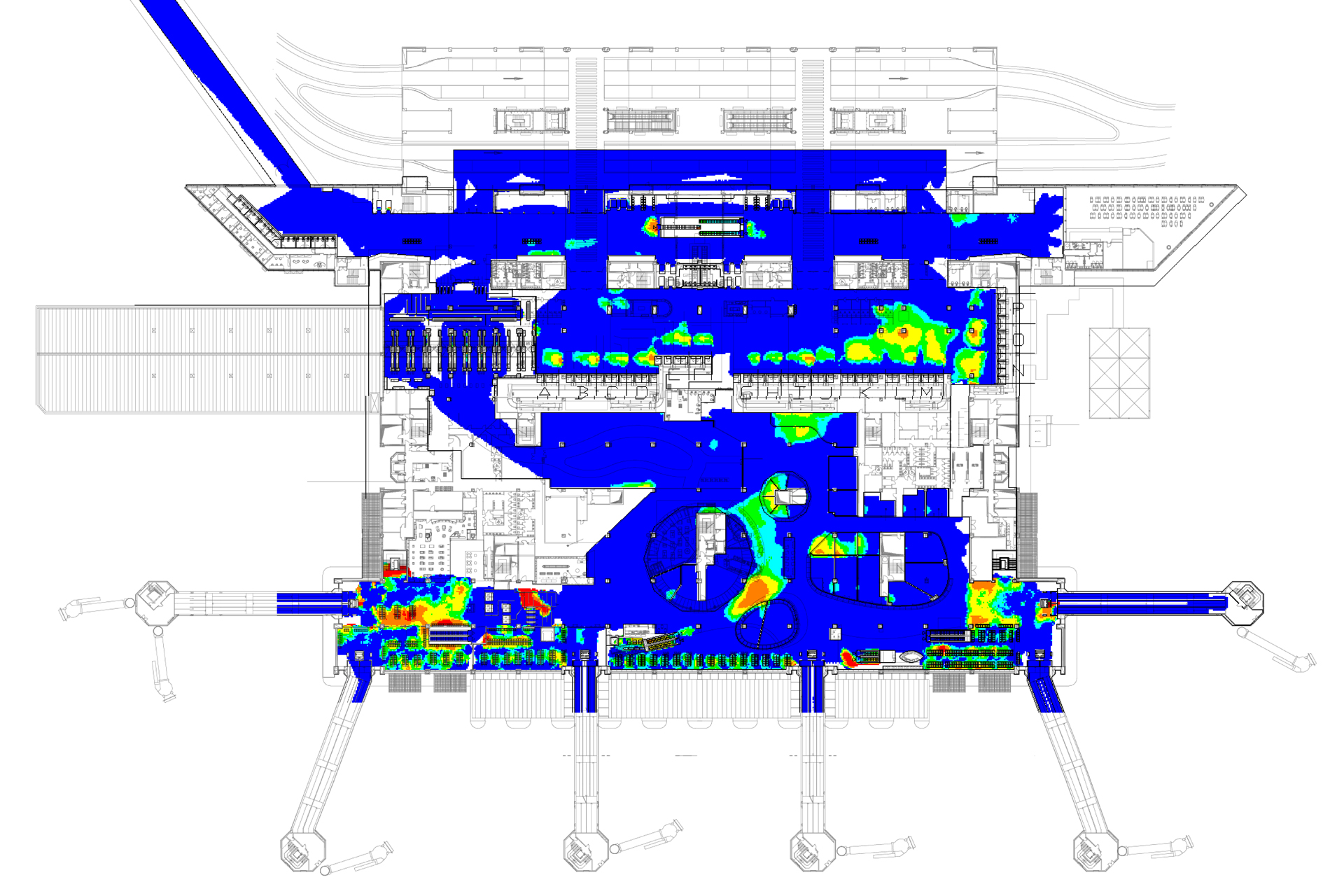
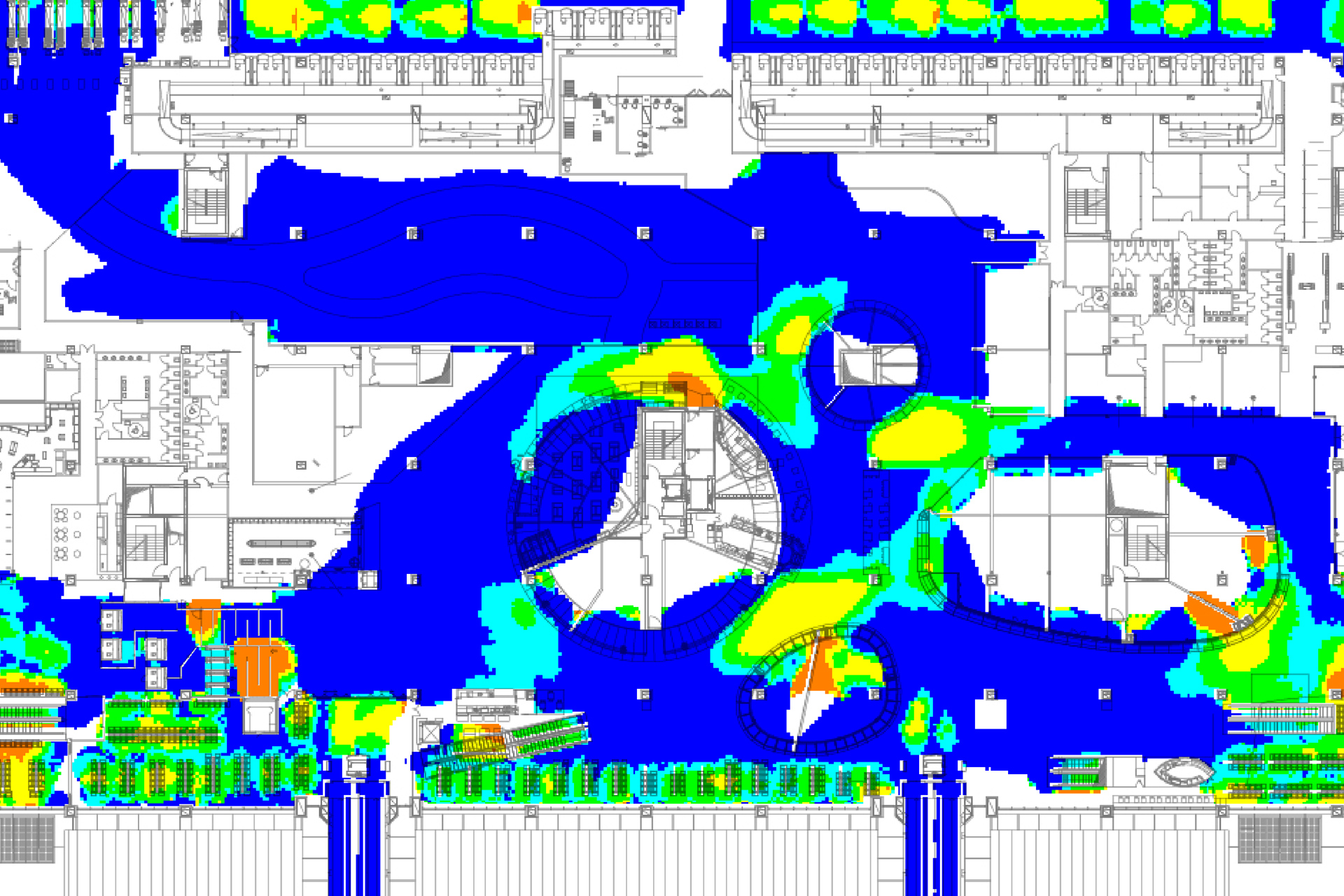
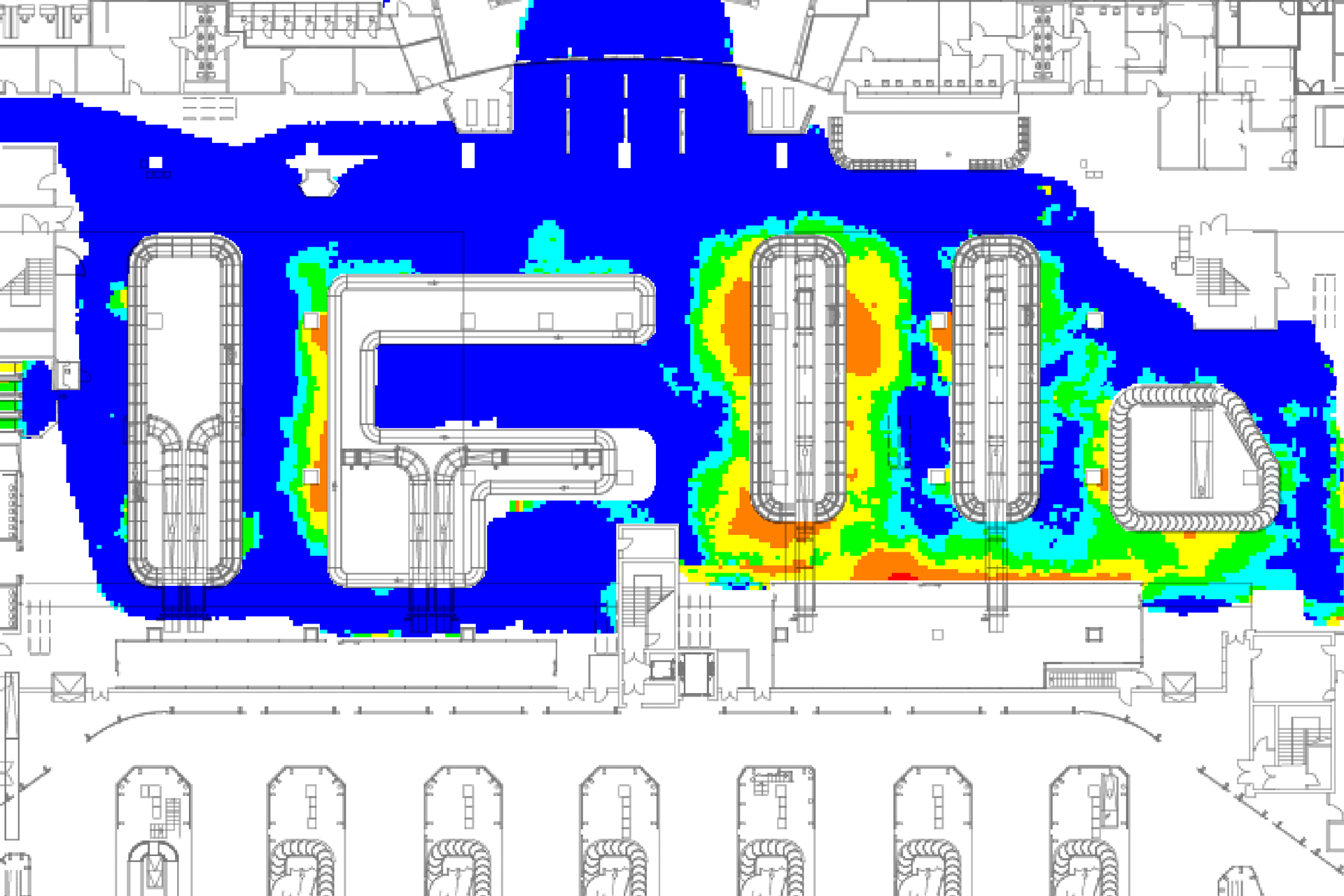
Using Legion SpaceWorks software, pedestrian flows and movement patterns were simulated to identify congestion risks, bottlenecks and underperforming areas, and to determine and resolve potential critical issues before construction.
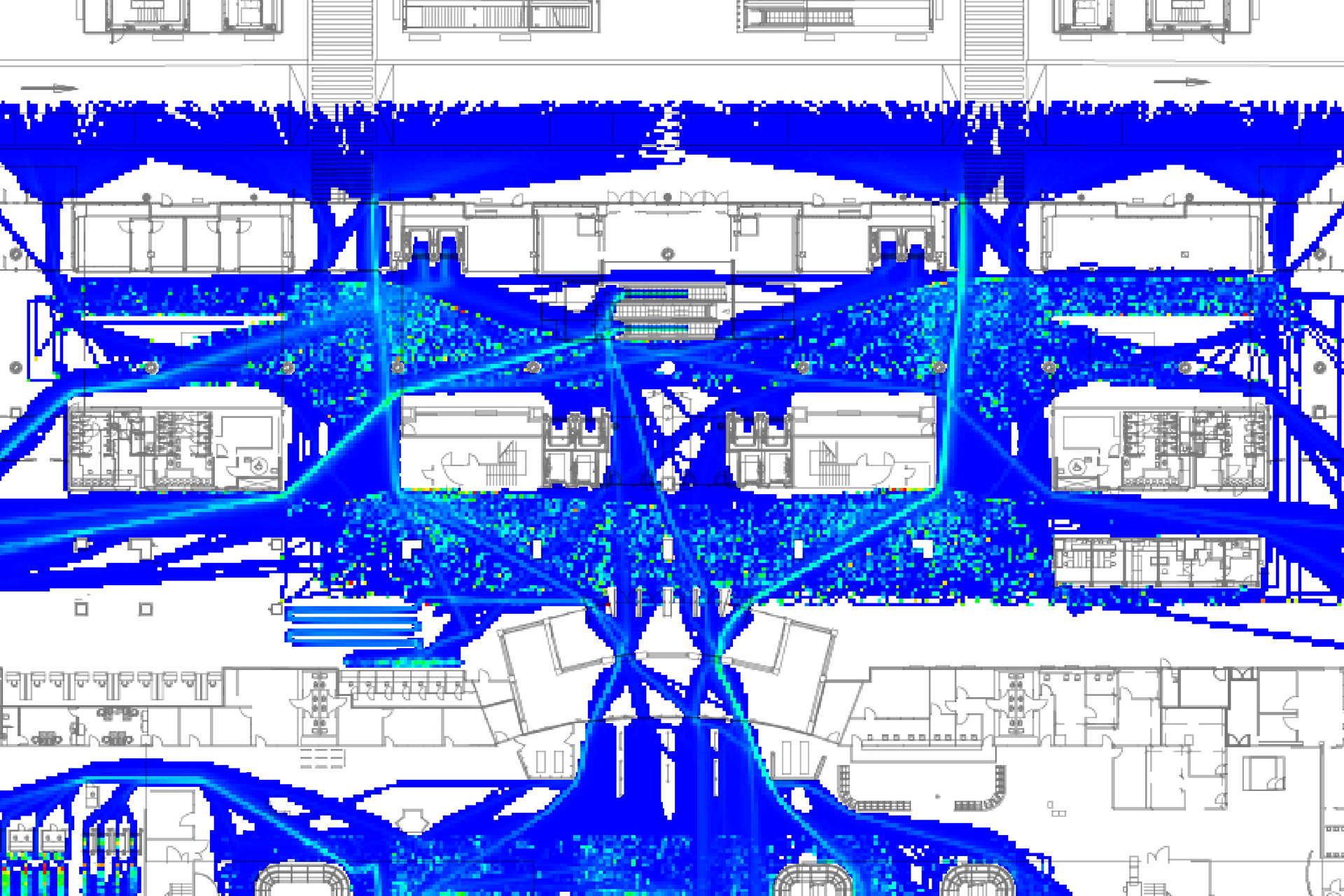
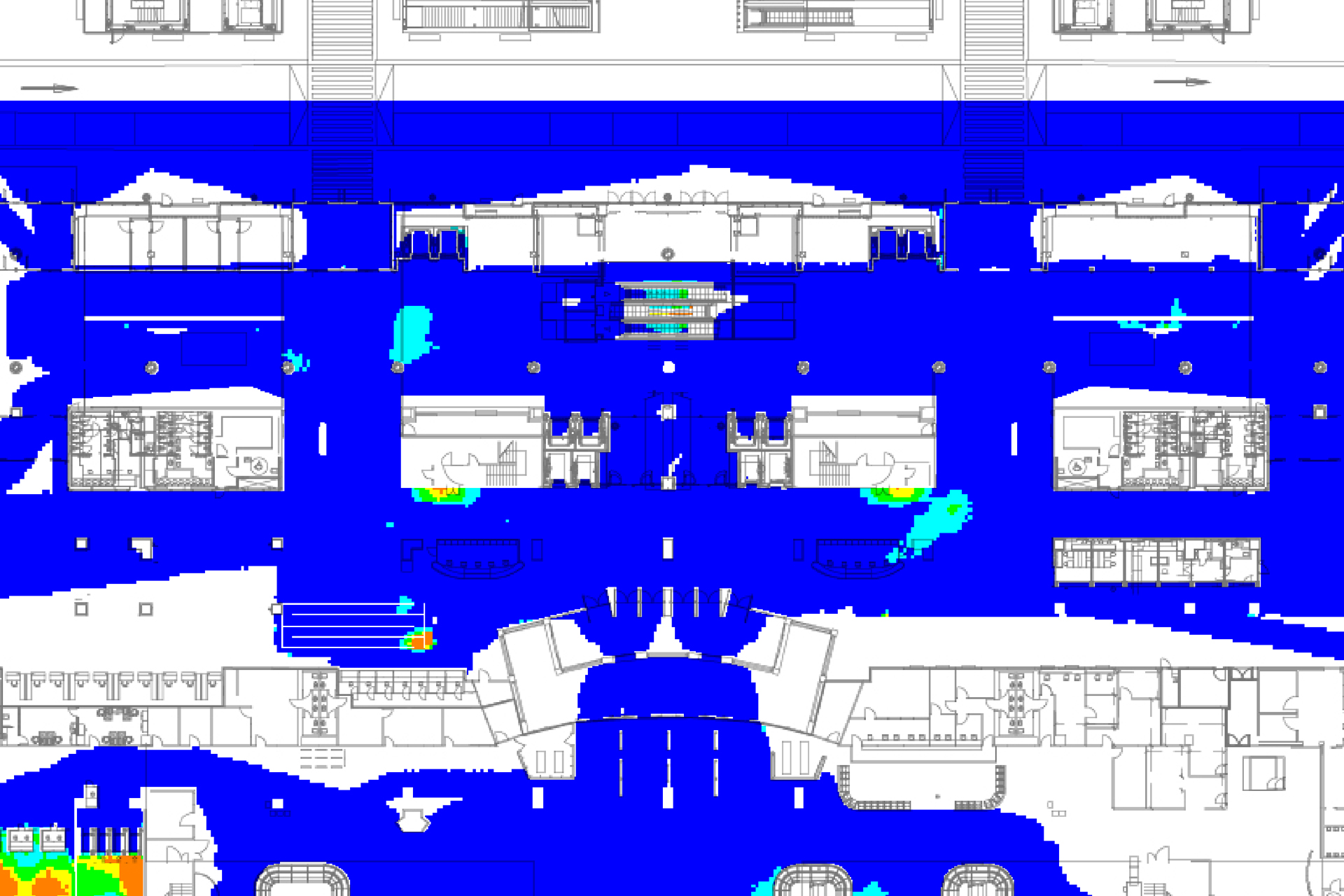
The simulation generated density maps of perceived crowding levels, and space utilisation maps indicating the functional performance of terminal areas.
The work provided data-driven insights for optimising the layout design, passenger experience, safety and operational efficiency of the airport terminal.