Pedestrian Simulation for Rome Fiumicino Airport
Rome, Italy
Fiumicino Rome’s major international airport is Italy’s busiest airport, handling over 40 million passengers per year. It is ITA Airways’s main hub and serves more than 100 airlines offering domestic and international flights.
Due to a significant anticipated increase in passenger numbers, the airport operator Aeroporti di Roma, developed new infrastructure in accordance with the long-term masterplan. This plan aimed to double the airport’s capacity to 100 million passengers per year.
The infrastructure included two new boarding areas: area F, formerly known as ‘Pier C’, and area E within Terminal 3’s expansion, providing an additional 22 gates for international and domestic flights.
Location
Rome, Italy
Client
Pedestrian Simulation for Rome Fiumicino Airport
Main expertise
Pedestrian Modelling
PROJECT HIGHLIGHTS
- Assessment of the operational performance of the new infrastructure and verification of passenger comfort levels
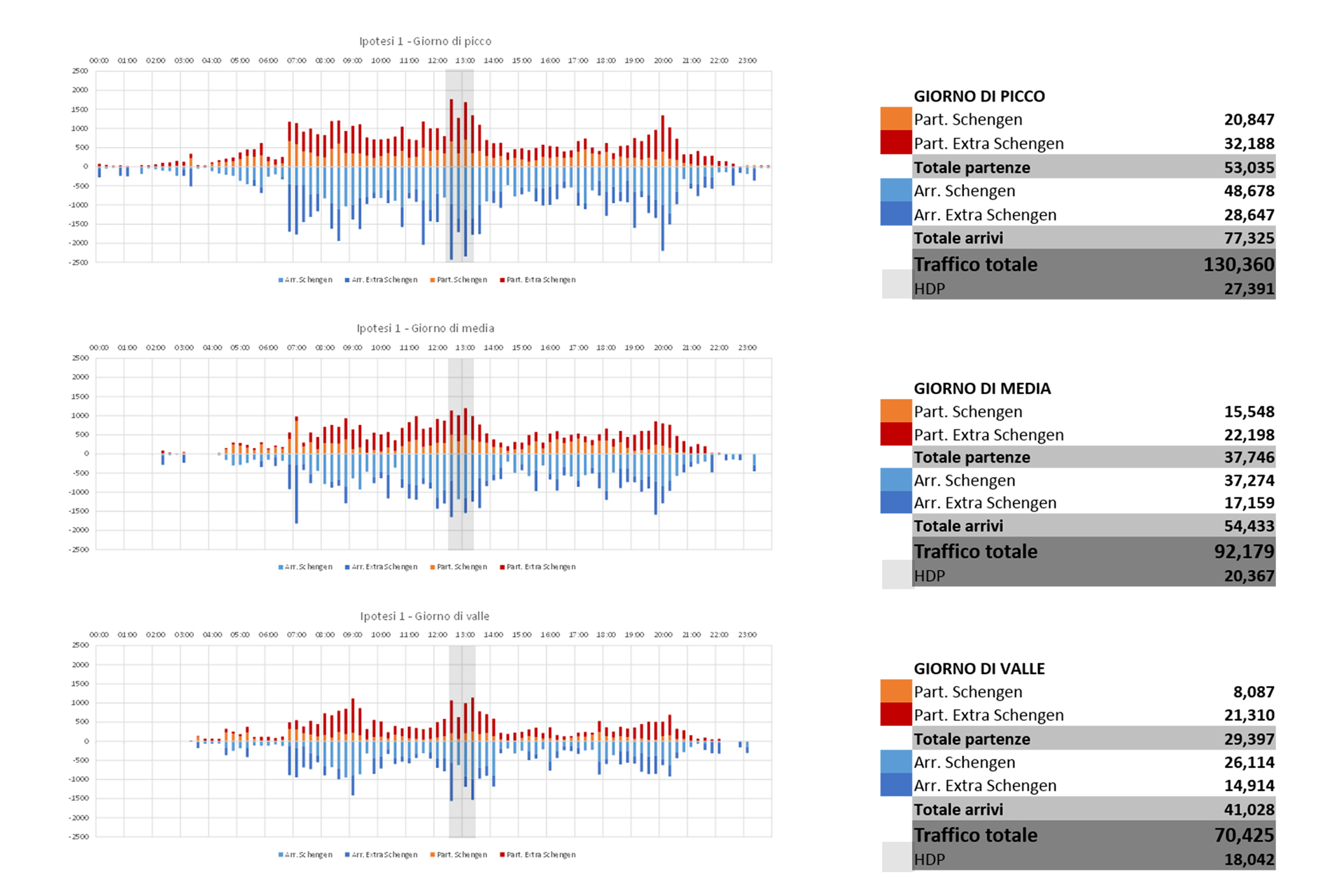
- Construction of an operational flight schedule based on traffic forecast scenarios
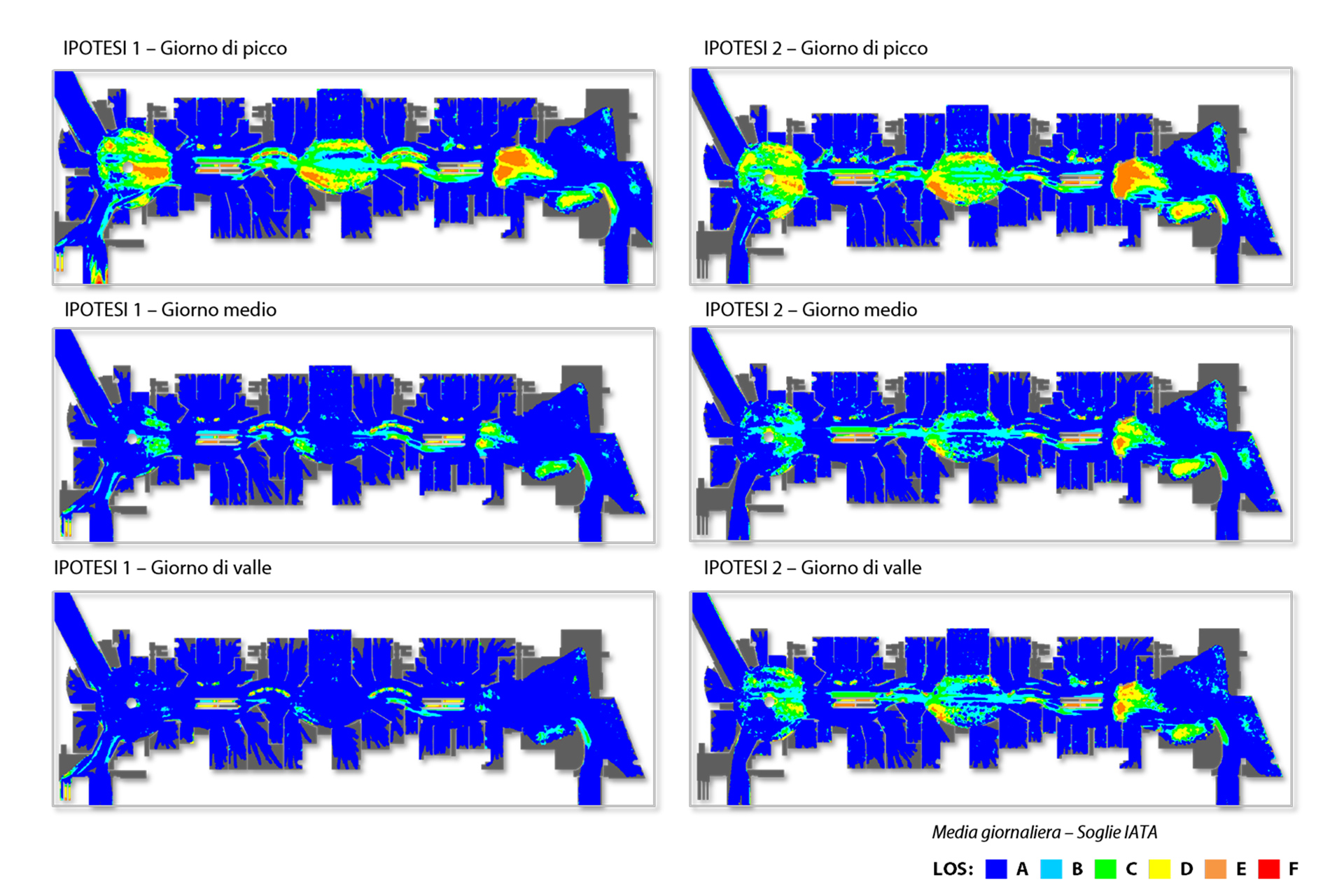
- Pedestrian simulation of the entire terminal over three typical days
- Level of Service (LOS) and Crowding Levels Analysis
Project gallery
-
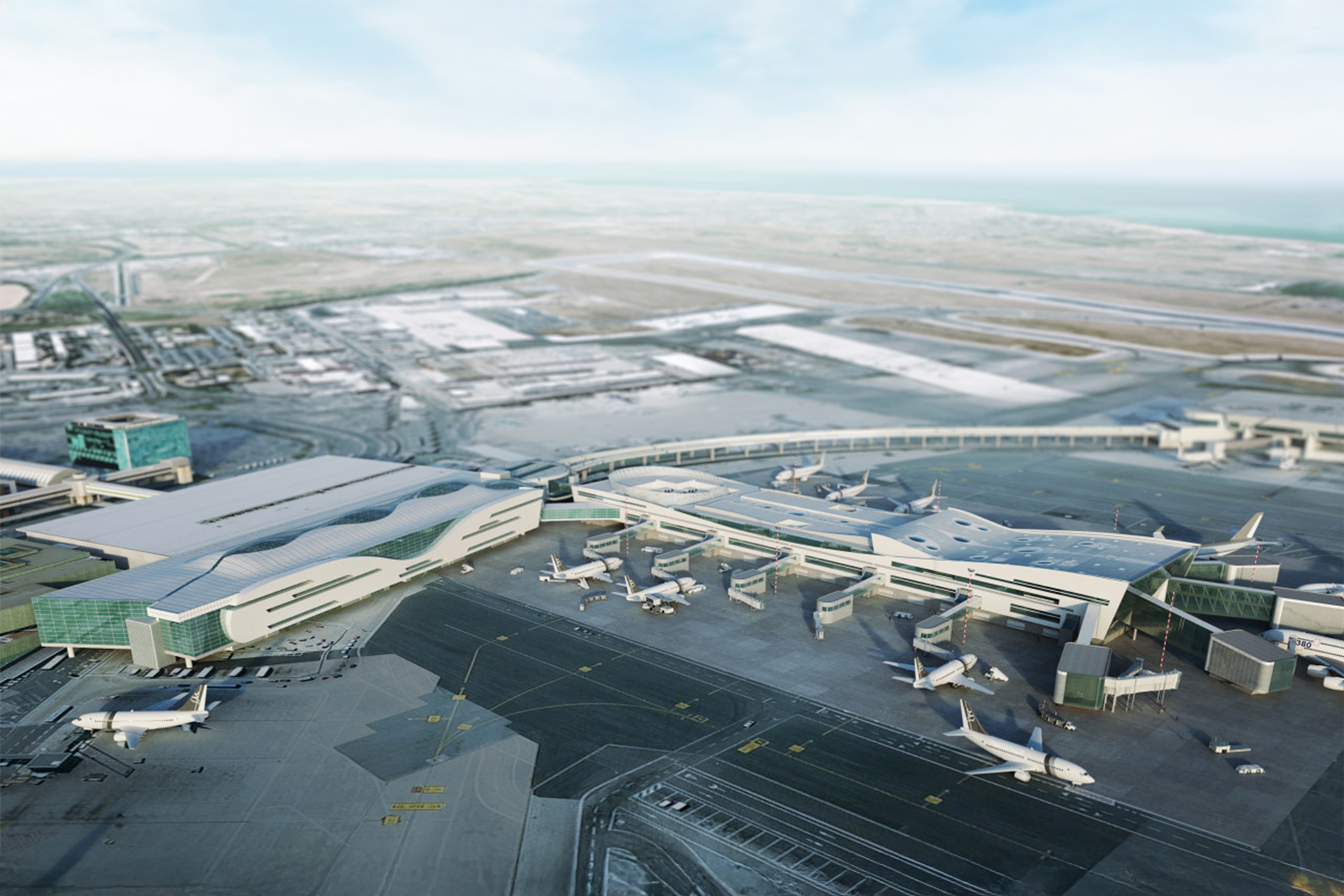
Visualisation of the new airside concourse and Pier F
-
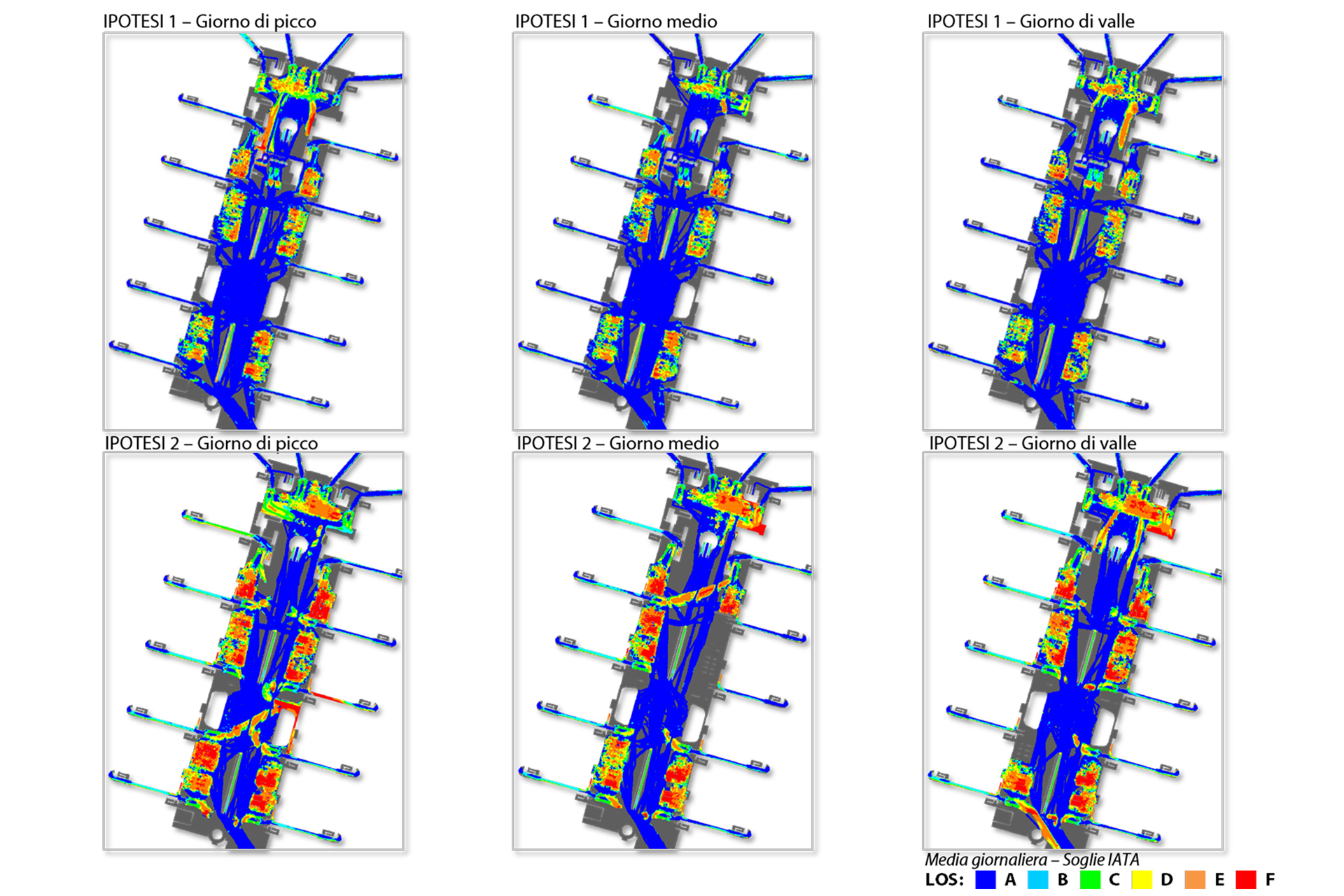
Pedestrian simulation of Area C over three typical days - Level of Service (LOS) and Crowding Levels Analysis
-
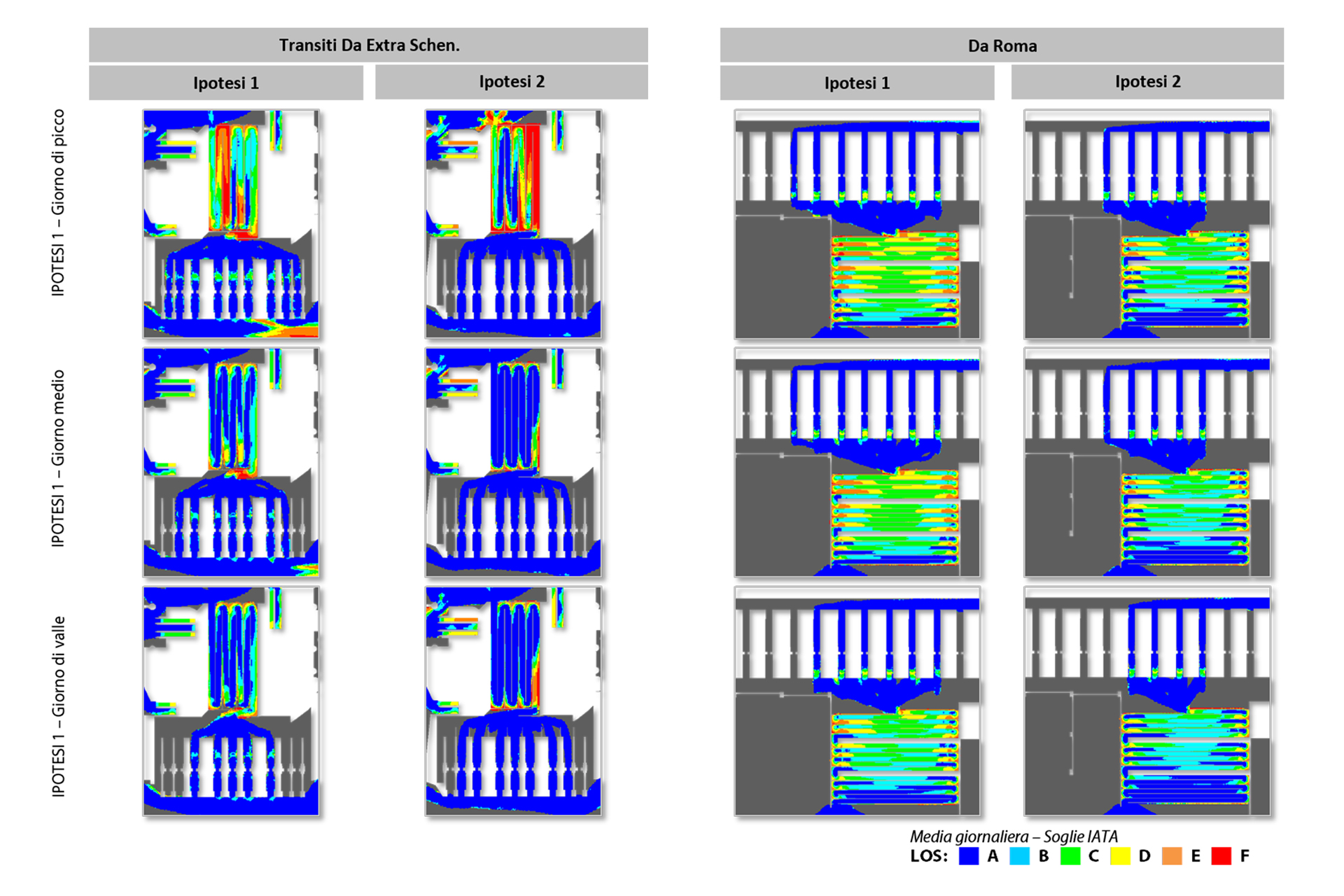
Pedestrian simulation of gates area over three typical days - Level of Service (LOS) and Crowding Levels Analysis
-
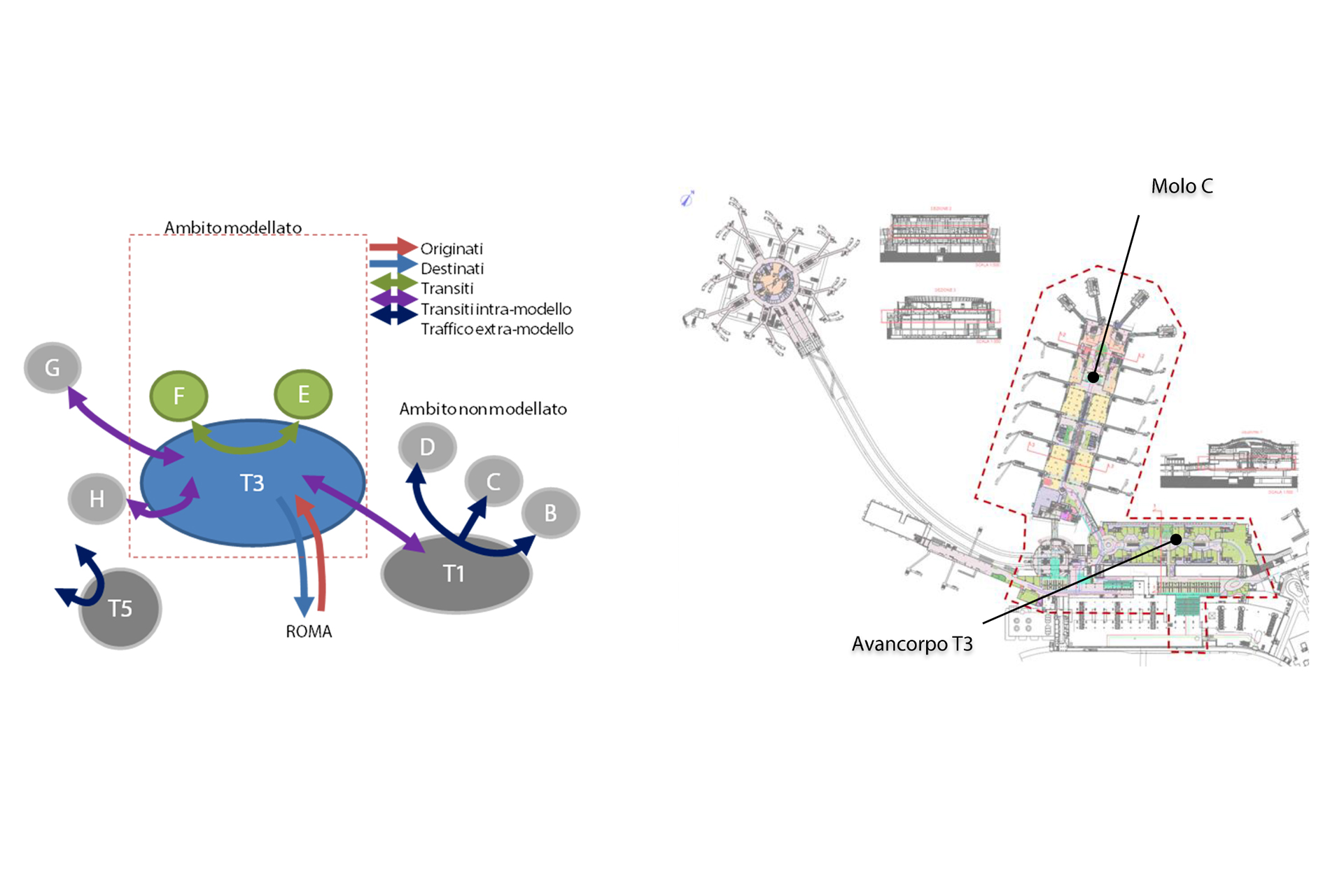
Study of connections and model areas
Our contribution
MIC-HUB was commissioned to assess the performance of these new facilities, paying particular attention to boarding and forward calling procedures, as well as ensuring an optimal level of comfort in the duty-free areas.
A provisional flight schedule based on projected figures was also developed, which considered not only the increase in traffic, but also the rearrangement of boarding areas throughout the airport. Preparing the schedule involved setting up a tailored mathematical model to calculate the increase in flights and generate slot allocations in line with airport constraints, including runway capacity, minimum turnaround times, and aircraft types.
The two new buildings were analysed by simulating the entire terminal on three typical days and with two different operational arrangements (all international flights and a mix of international and domestic flights) using Legion™, an agent-based pedestrian simulation software. The model incorporated all security and customs control facilities, the extensive duty-free area, the food court, lounge areas and boarding gates.
The study provided real data on passenger attendance throughout the simulated days, including average time spent on site, density levels and space utilisation. The maps generated by the software enabled critical interior design issues to be identified, as well as the potential for an alternative spatial arrangement of the commercial facilities.
In addition, the model allowed the detailed flight schedule to be used to accurately verify the adequacy of the number and size of the queuing areas adjoining the control facilities.