Sun Flower Islands, Penang
Penang, Malaysia
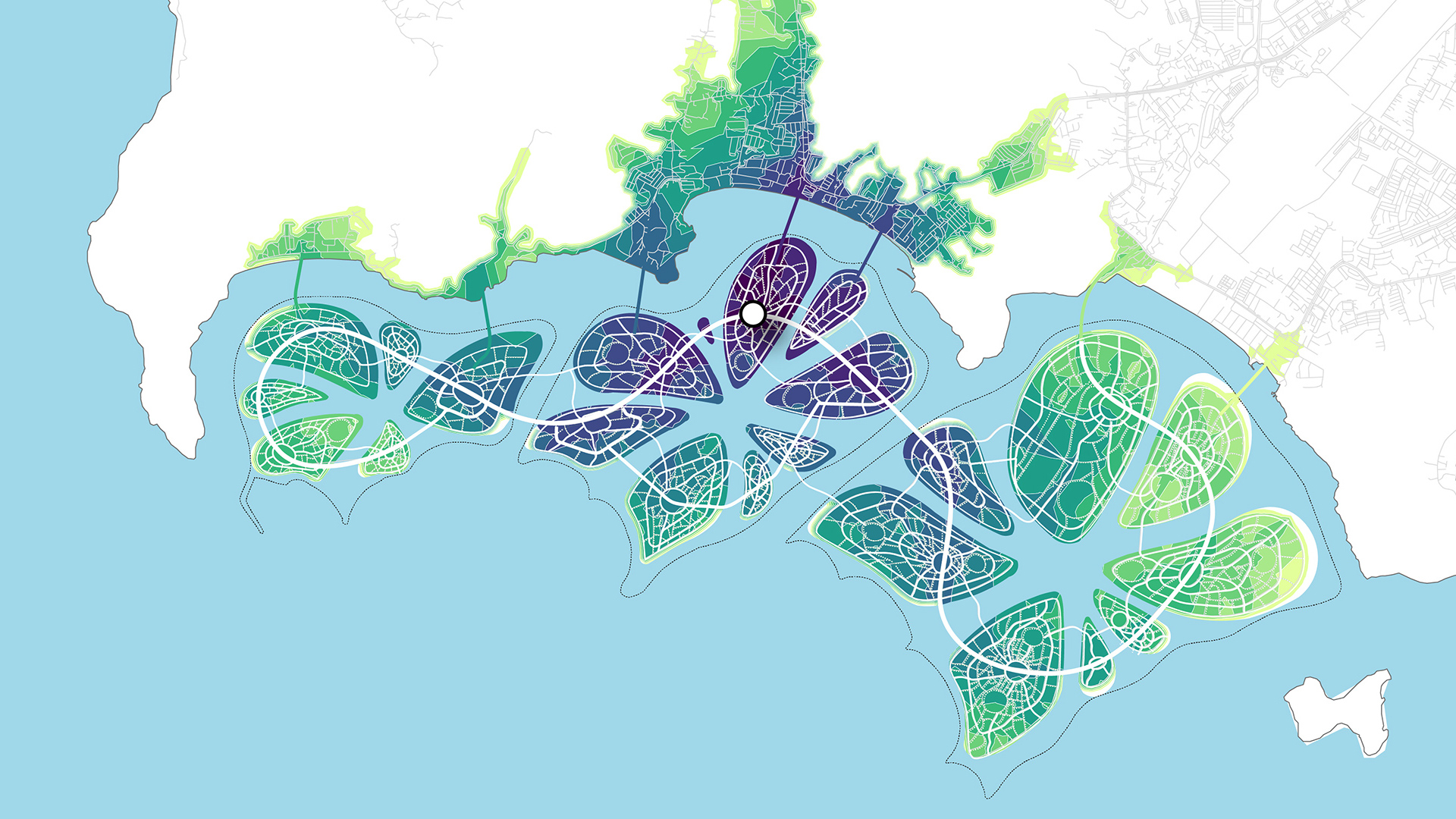
The Sun Flower Islands, so named because of their distinctive flower-like geometry, are a visionary proposal to create three artificial islands south of Penang Island in Malaysia.
The project represents a new model for large-scale coastal development, combining environmental responsibility with long-term economic growth.
Developed through an international design competition led by MVRDV, the masterplan integrates sustainable urban design principles with advanced smart city technologies.
A core element of the proposal is the integrated mobility strategy developed by MIC-HUB, which supports the futuristic vision of the islands.
Location
Penang, Malaysia
Client
MVRDV Rotterdam
Main expertise
Master plan Mobility; Spatial Analysis; Data Visualisation; Traffic Impact Studies & Assessments
PROJECT HIGHLIGHTS
- Data-driven approach to guide the decision-making process
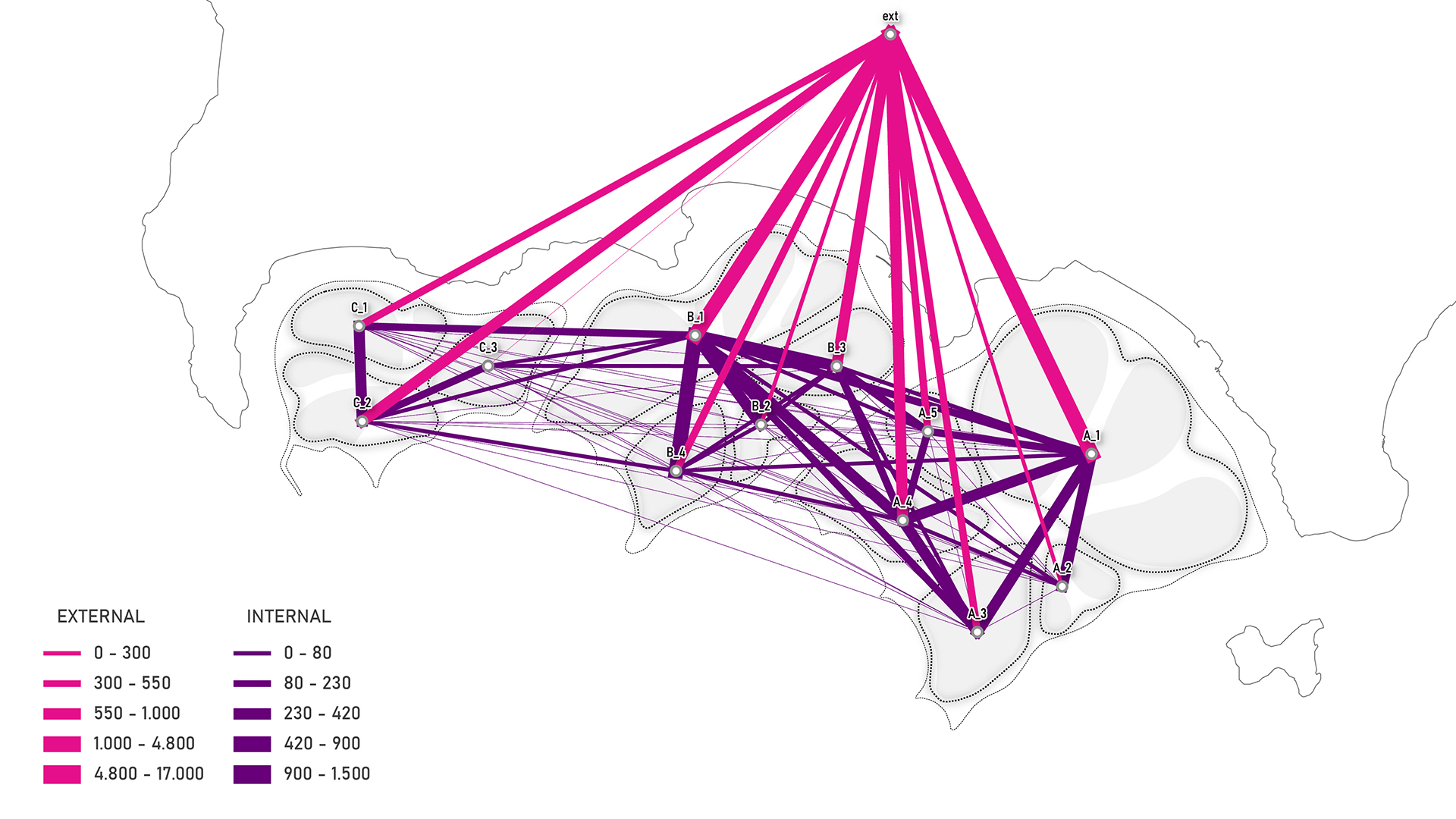
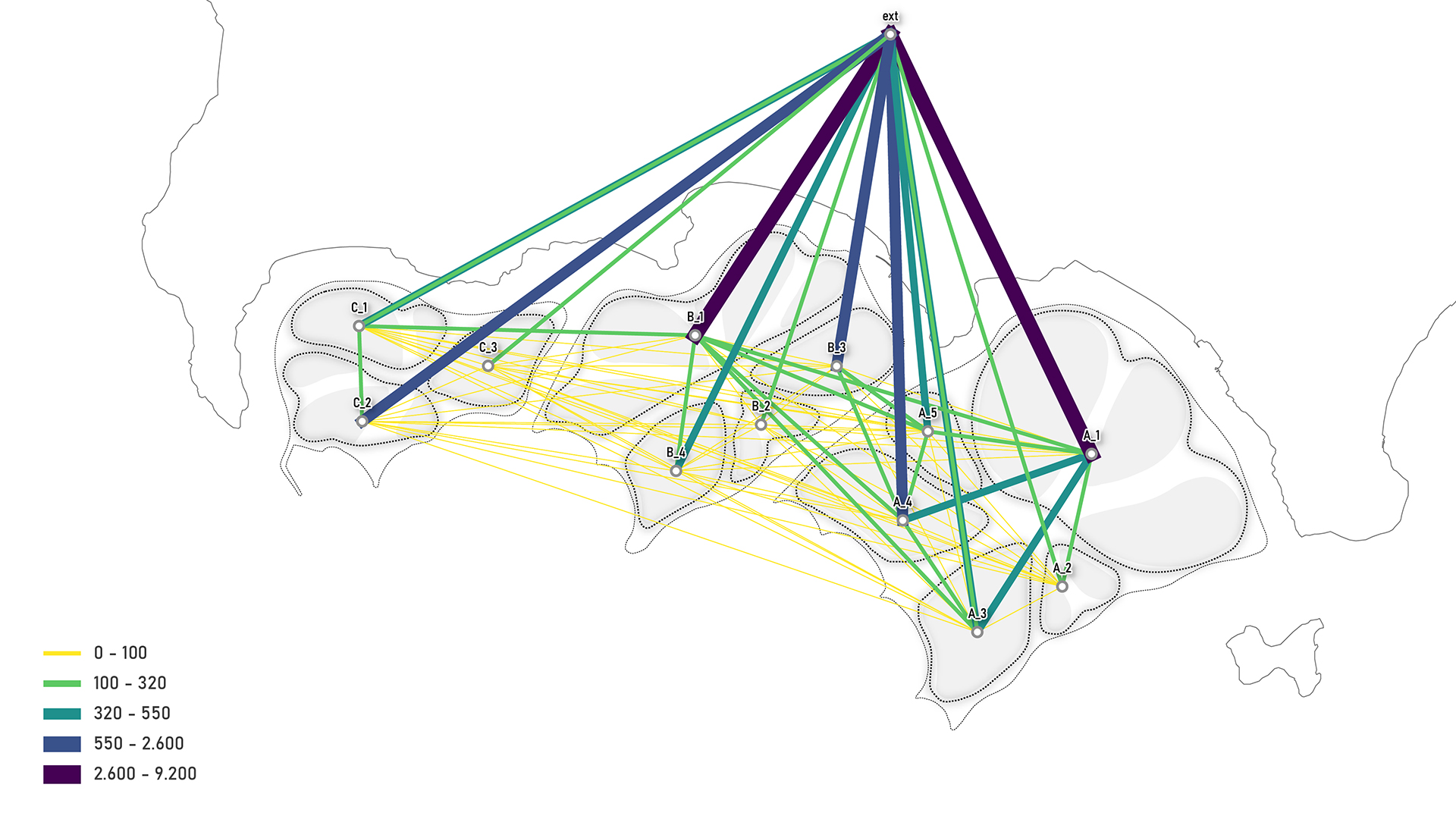
- Forecast of transport demand by estimating the number of trips using OD matrices
- Data visualisation of mobility flows across the masterplan
Project gallery
-
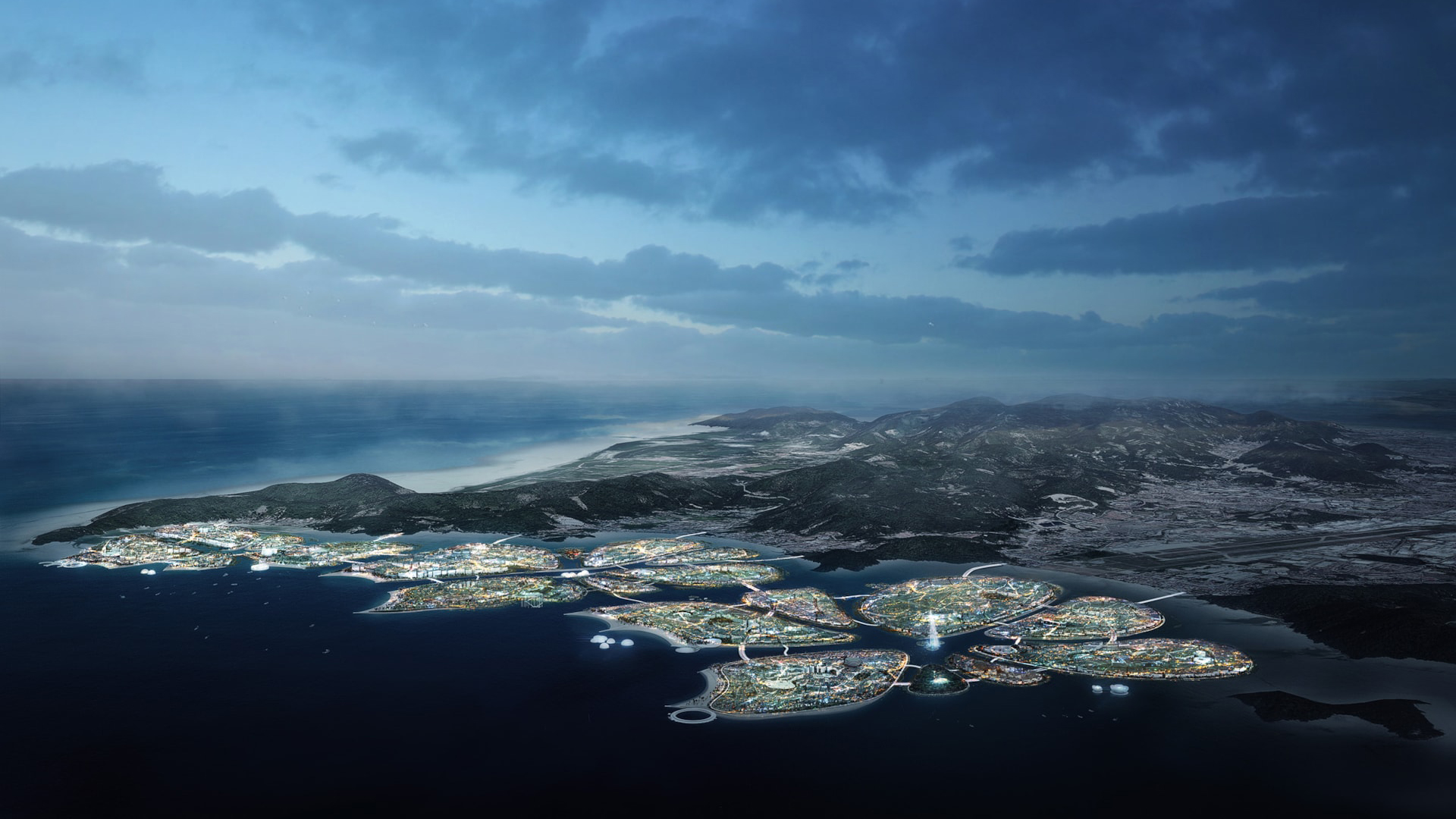
The Sun Flower Islands - © MVRDV Winy Maas, Jacob van Rijs, Nathalie de Vries
-
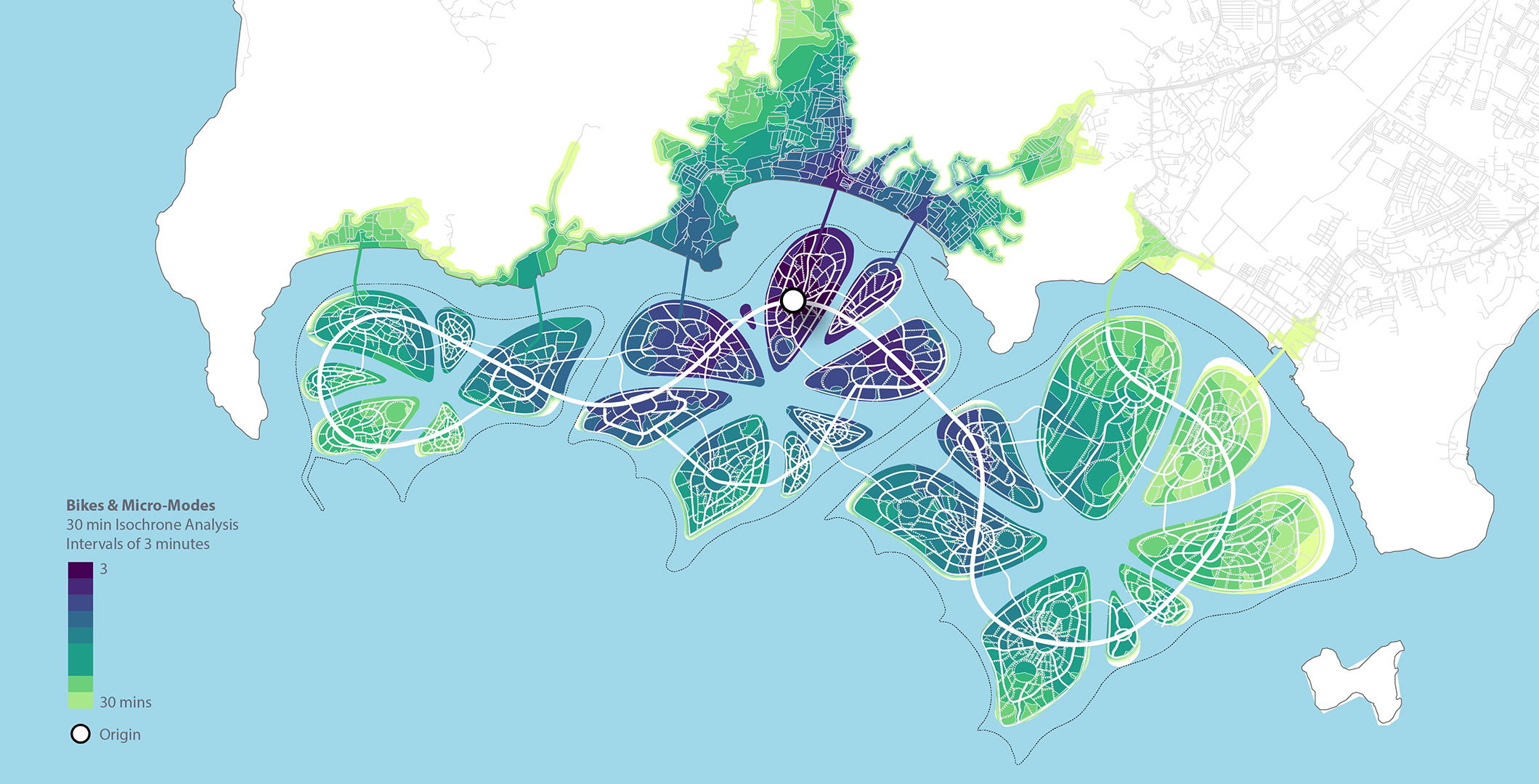
Isochrone Analysis: bikes and micro mobility
-
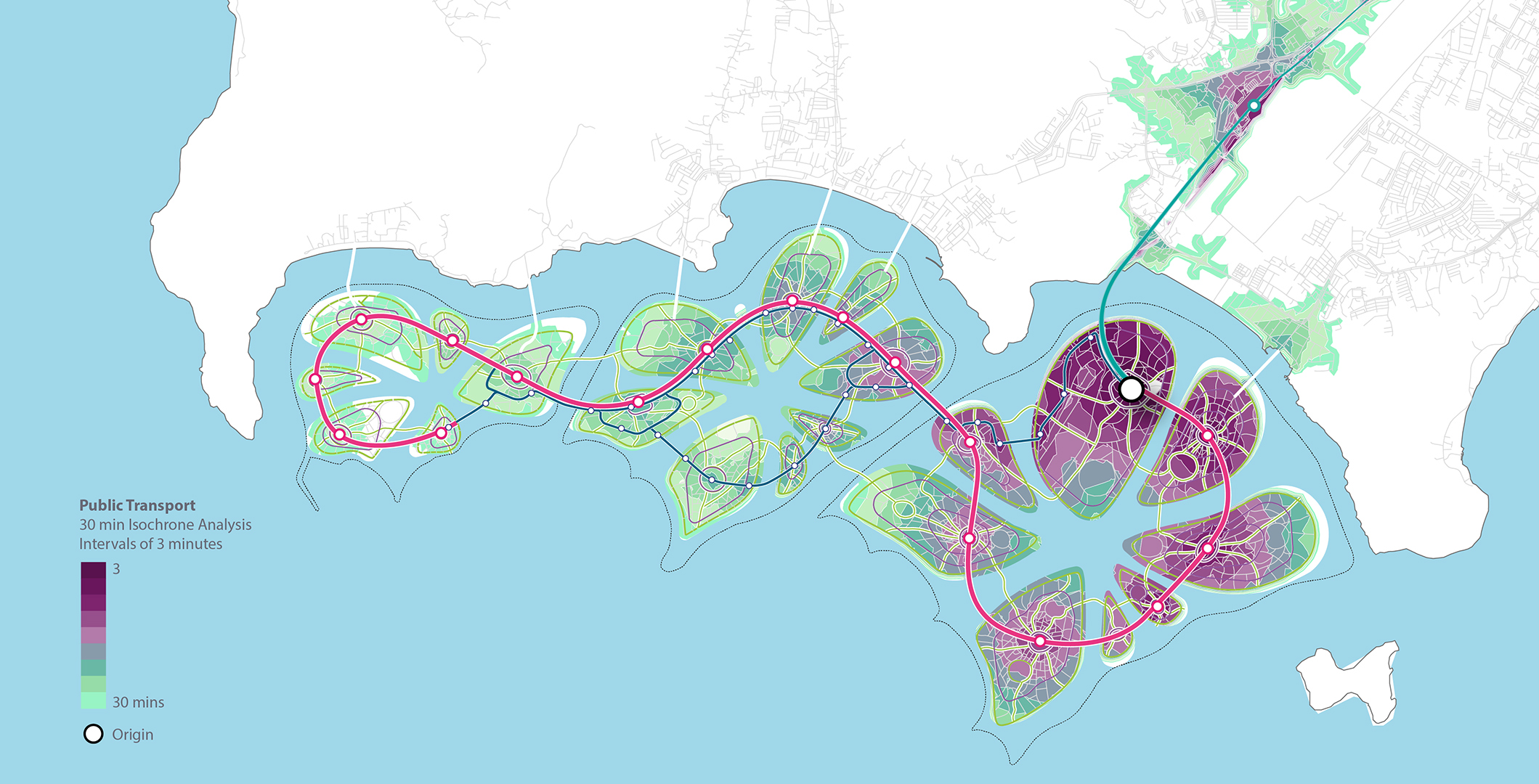
Isochrone Analysis: public transport
-
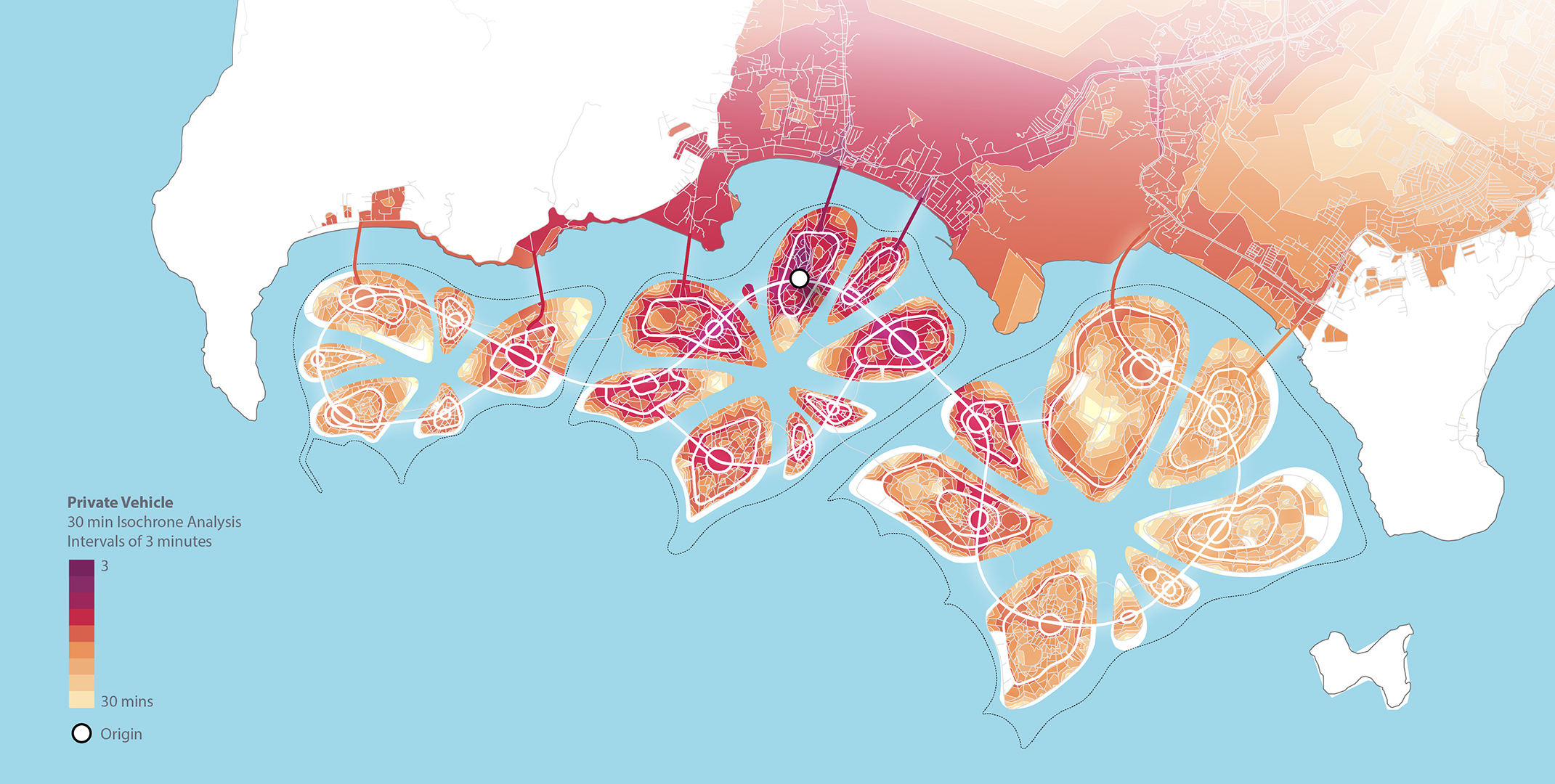
Isochrone Analysis: private vehicle
-
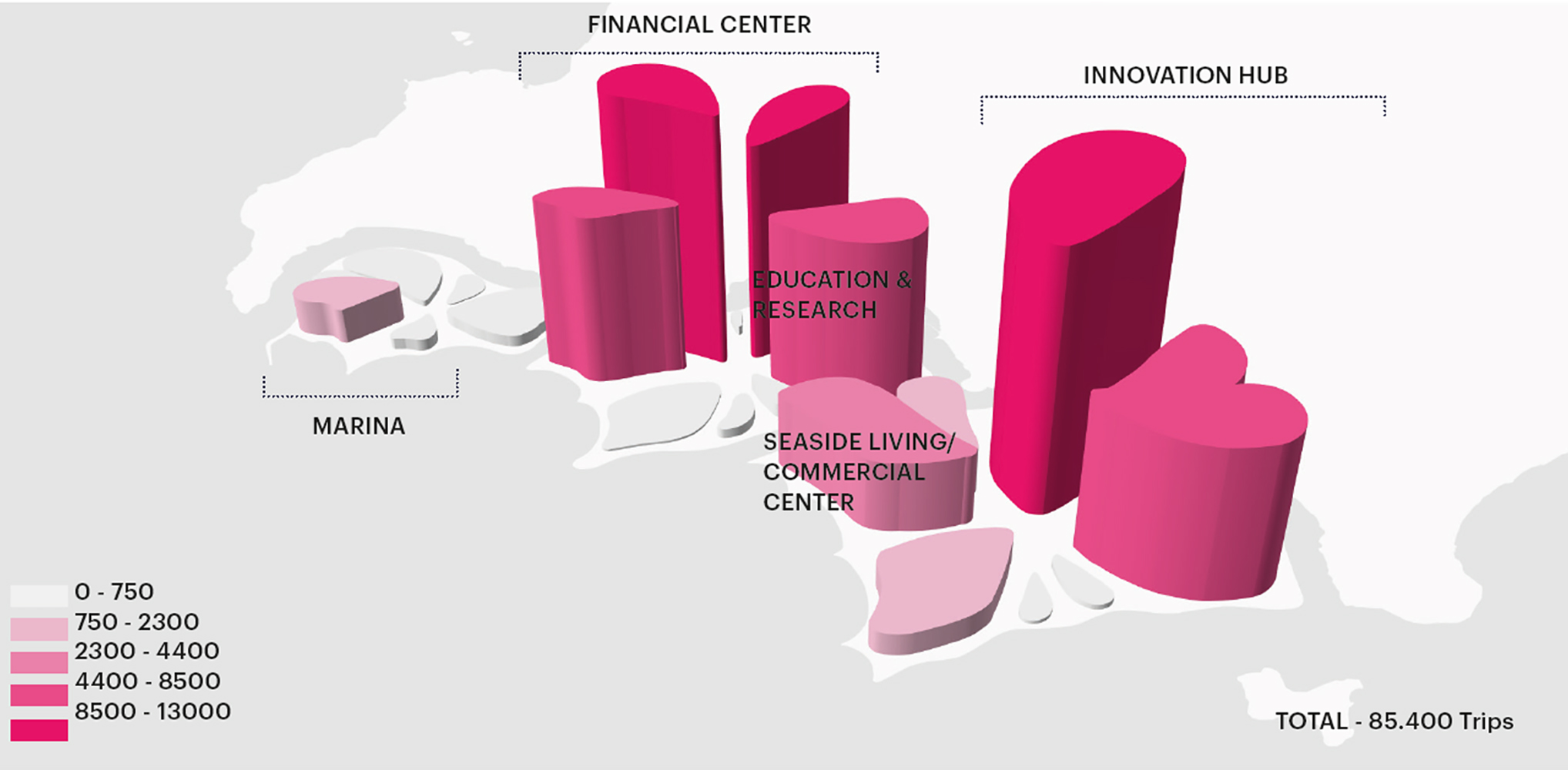
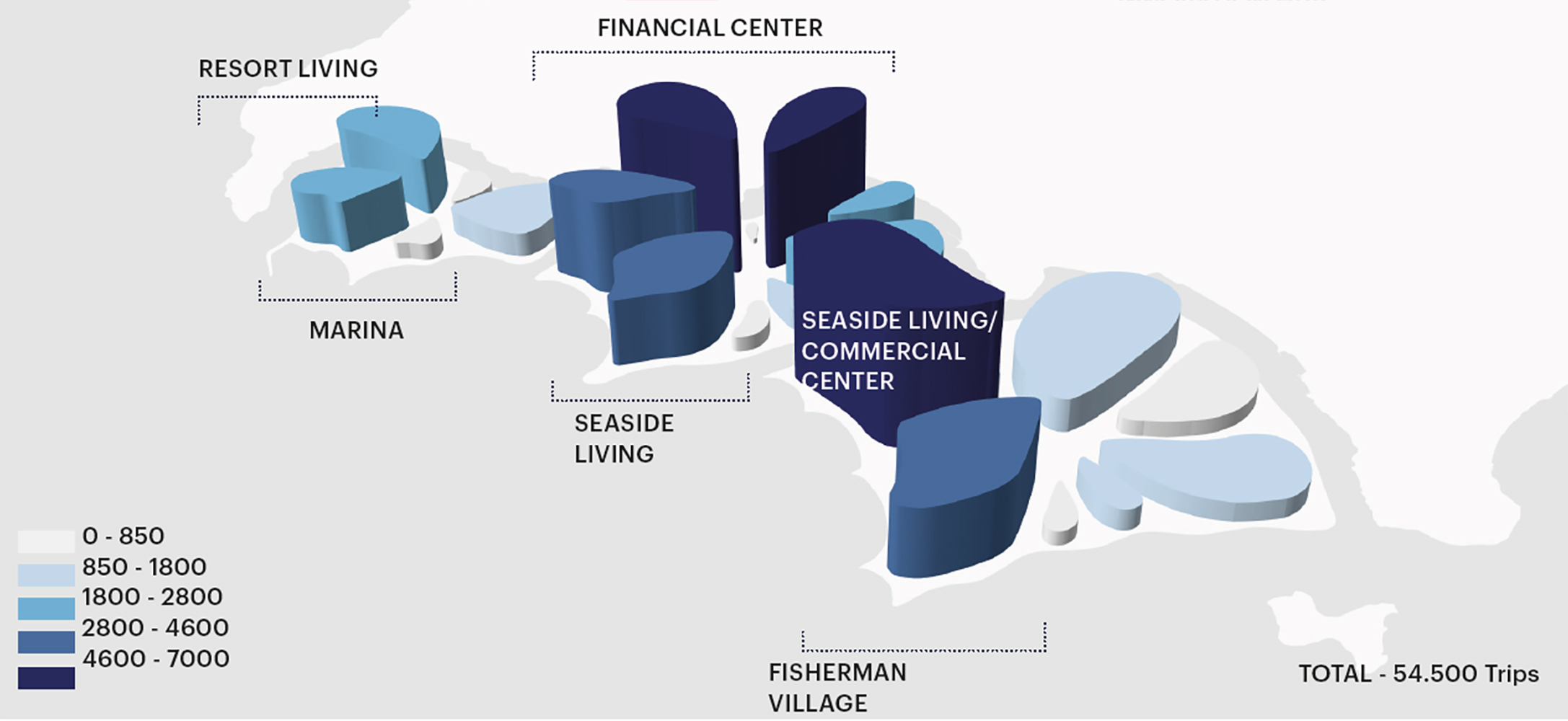
Spatial Analysis: Trips attracted by each cluster
-
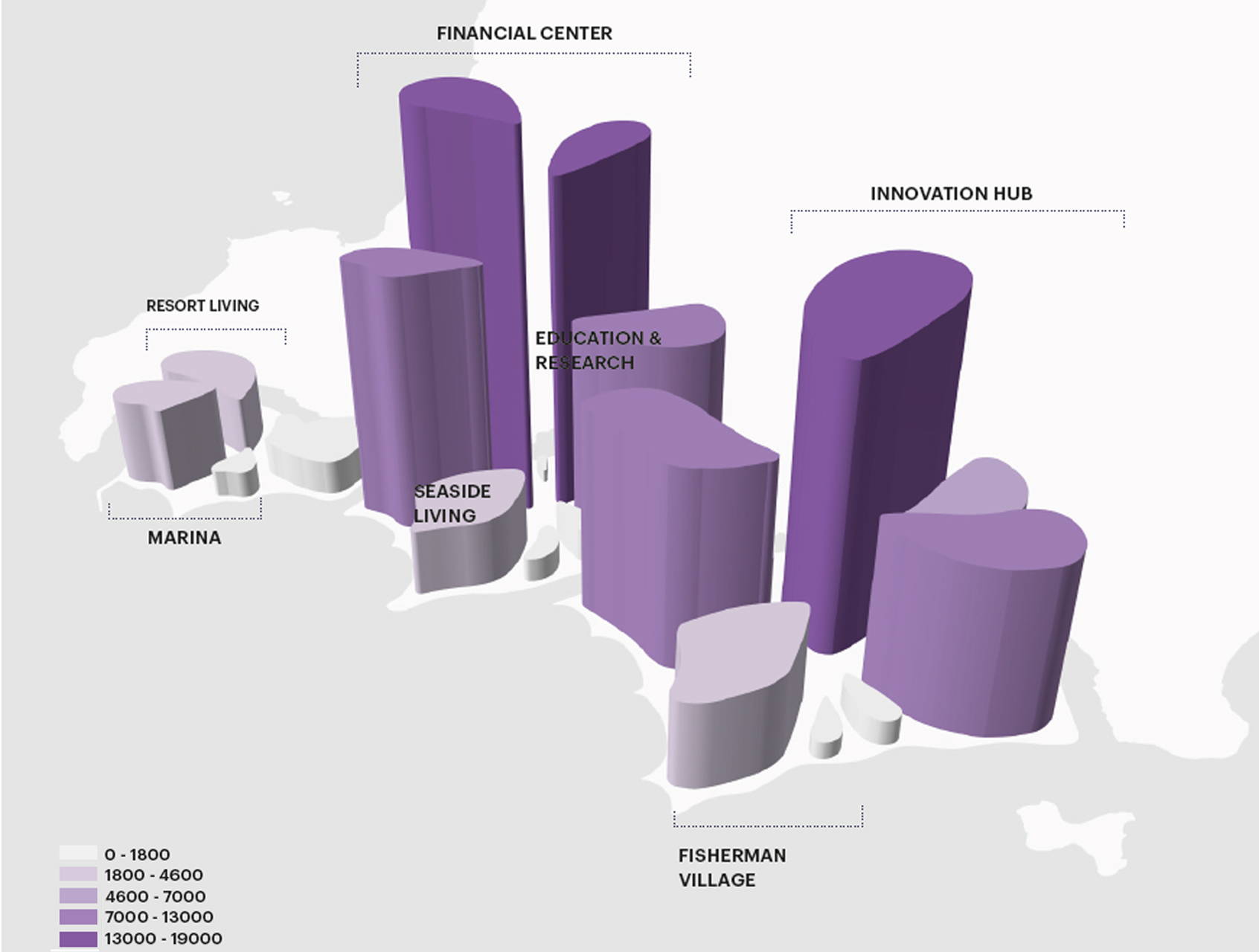
Spatial Analysis: Trips generated by each cluster
-
Spatial Analysis: Overall density of trips per cluster
-
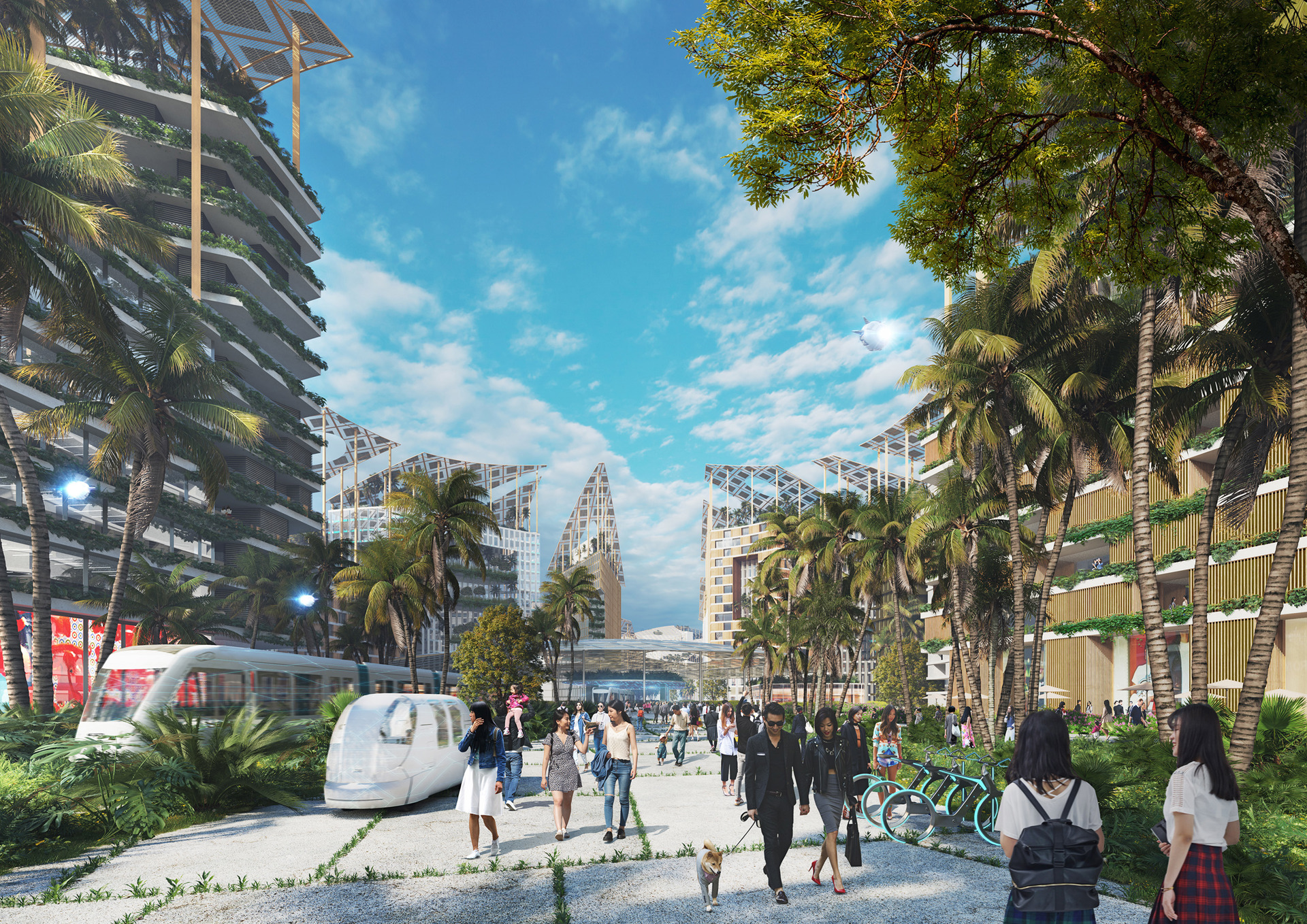
The Sun Flower Islands - © MVRDV Winy Maas, Jacob van Rijs, Nathalie de Vries
Our contribution
MIC-HUB carried out a comprehensive mobility study to support the masterplan, defining a long-term transport strategy in alignment with metropolitan-scale urban development plans.
MIC-HUB’s approach combined technical expertise, mobility data science, and a strategic planning vision to structure movements to and within the islands. The study addressed road network hierarchies, micromobility systems, and the integration of sustainable, low-impact mobility solutions.
MIC-HUB used spatial analysis models to assess population distribution, travel demand, and the functional relationships generated by the masterplan.
Using computational models based on travel demand estimation, cluster interactions, attraction levels, and origin–destination (OD) matrices, it was possible to simulate both internal and external mobility flows associated with the site.
This data-driven approach provided a solid quantitative foundation to support planning decisions, the design of sustainable mobility solutions, and the integration of the site within the wider urban context of Penang.
The mobility solutions were developed alongside the creation of a high-quality pedestrian environment, designed to minimise car-dominated areas and focus on public space quality.
This design approach ensures efficient circulation within the site and establishes a replicable reference model for sustainable mobility strategies in the wider Penang metropolitan area.