Bellevue Grand Connection, Seattle
Seattle, USA
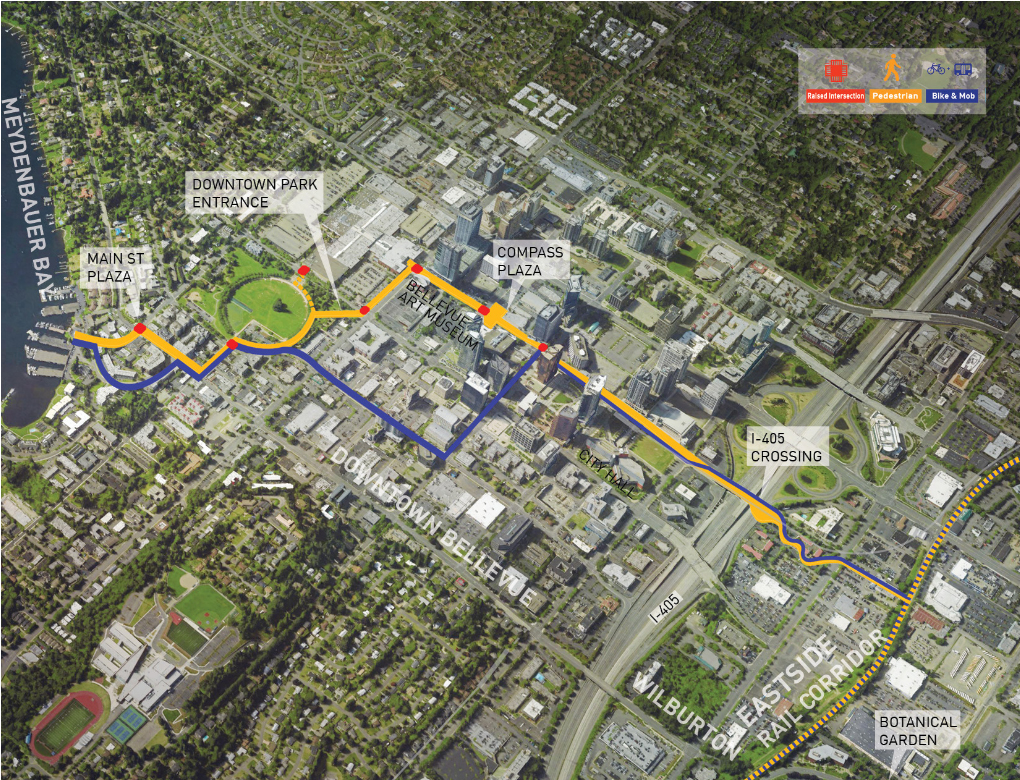
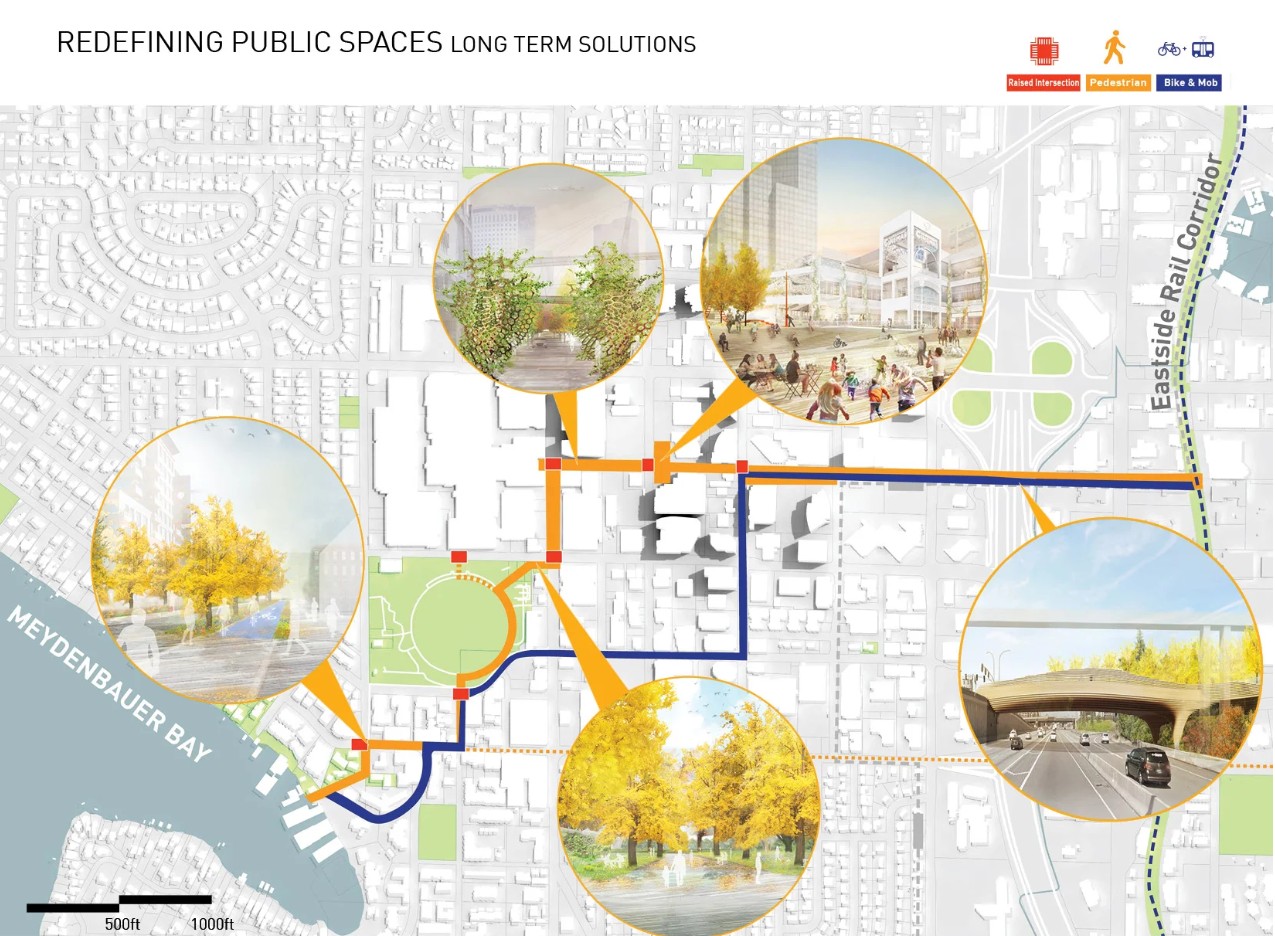
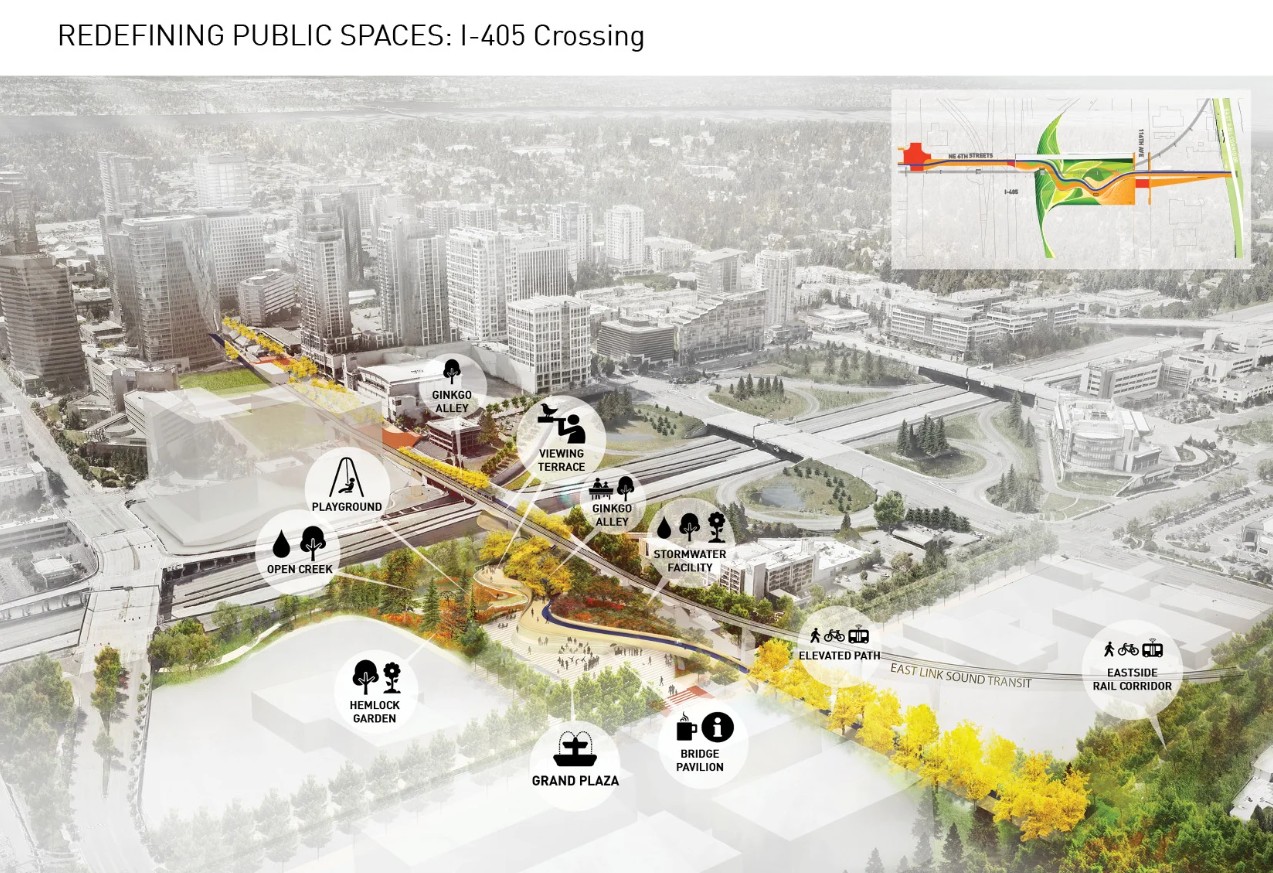
The Grand Connection is Bellevue’s flagship place-making project in the city centre. The project proposed a series of cohesive, connected, and memorable spaces, as well as pedestrian-focused experiences and initiatives, throughout Bellevue’s central business district.
It provides a sweeping new vision for the city. Designed to be a distinctive urban experience and a means of connectivity, the Grand Connection will become a recognisable feature of Bellevue’s urban landscape.
Enhanced connectivity, urban amenities and experiences will complement Bellevue’s existing Downtown infrastructure, while a distinctive crossing over Interstate I-405.
As a long-term project, the Grand Connection will incorporate smaller placemaking improvements to claim the corridor and establish the overall vision.
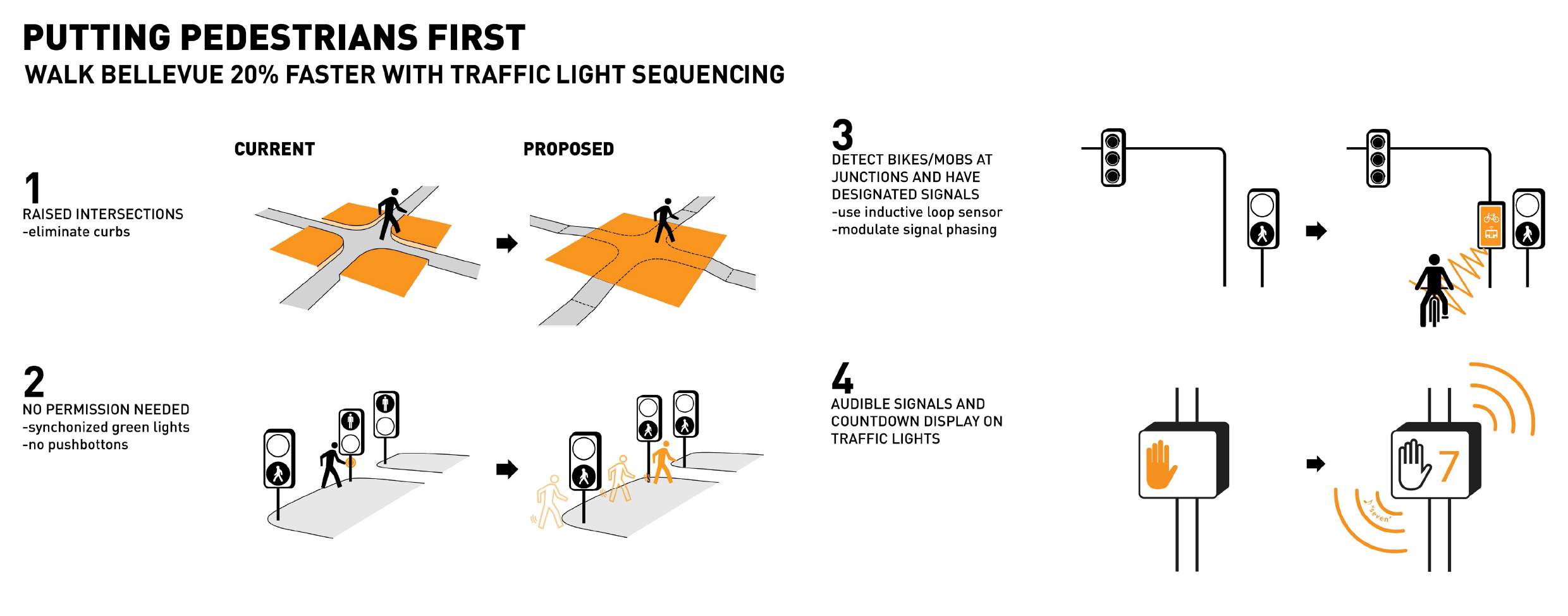
As well as improving aesthetics and placemaking, the Grand Connection will enhance overall connectivity and safety for non-motorised transport. Building upon the framework of the Pedestrian Corridor plan, the Grand Connection will create a new environment for pedestrians and cyclists that embraces the urban nature of Downtown Bellevue.
Location
Seattle, USA
Client
Balmori Associates
Main expertise
Mobility Consultancy
PROJECT HIGHLIGHTS
- Improved connectivity and mobility with a focus on pedestrian and sustainable mode
- Improved quality and experience of existing and future public spaces
- Pursuit of innovative and creative means of placemaking to create a unique urban experience
Project gallery
Our contribution
While the visioning process helped to establish an exciting and transformational vision, it also aimed to be pragmatic, recognising the constraints of the various locations along the route.
The process was tasked with developing solutions for the short and long term, creating goals and opportunities as Bellevue grows, while capitalising on early successes and implementable strategies that are mindful of budget and time constraints.
The Grand Connection Visioning Framework Report contains a wide range of improvements for the short and long term. These consider issues regarding mobility, public space, connectivity and programming.
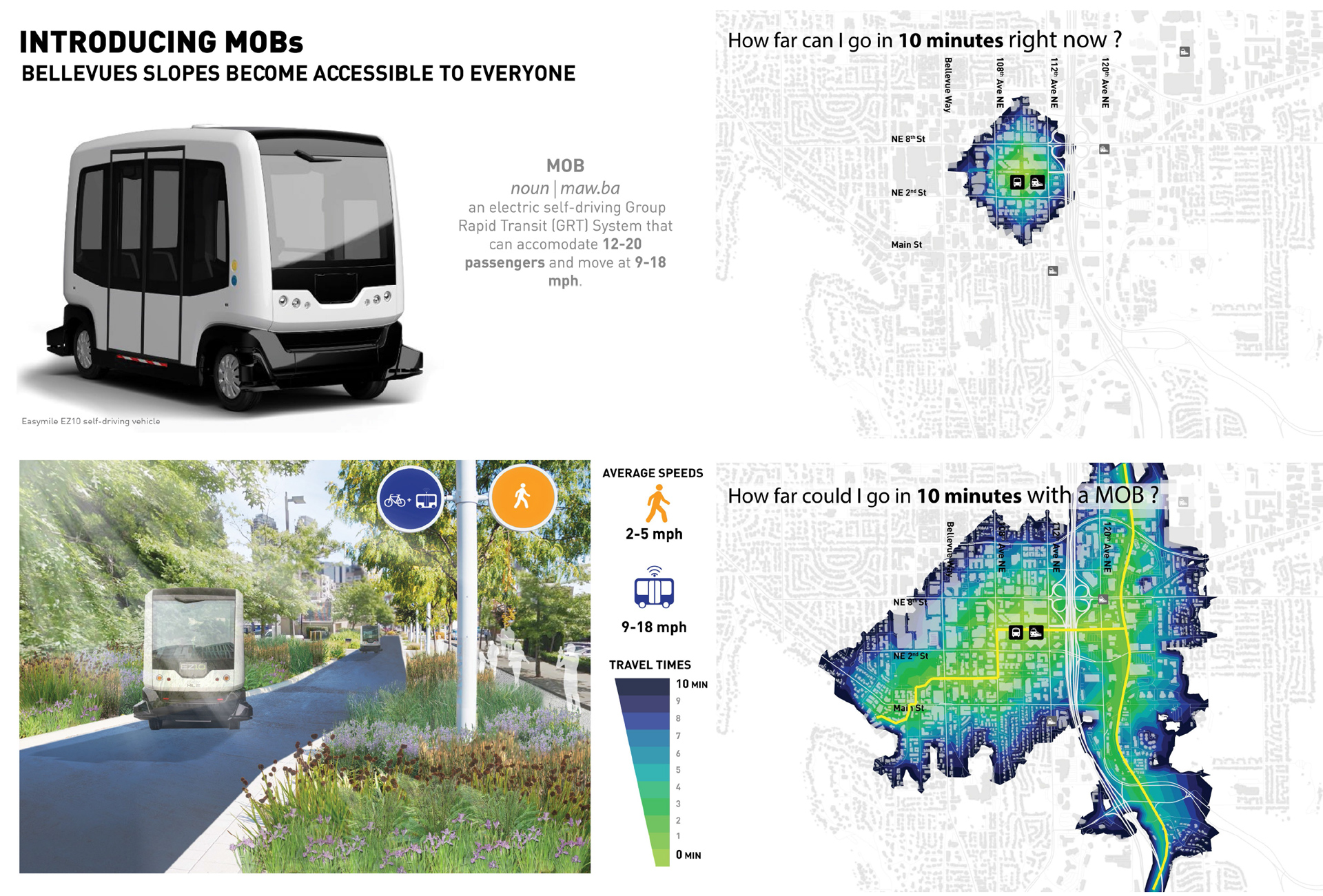
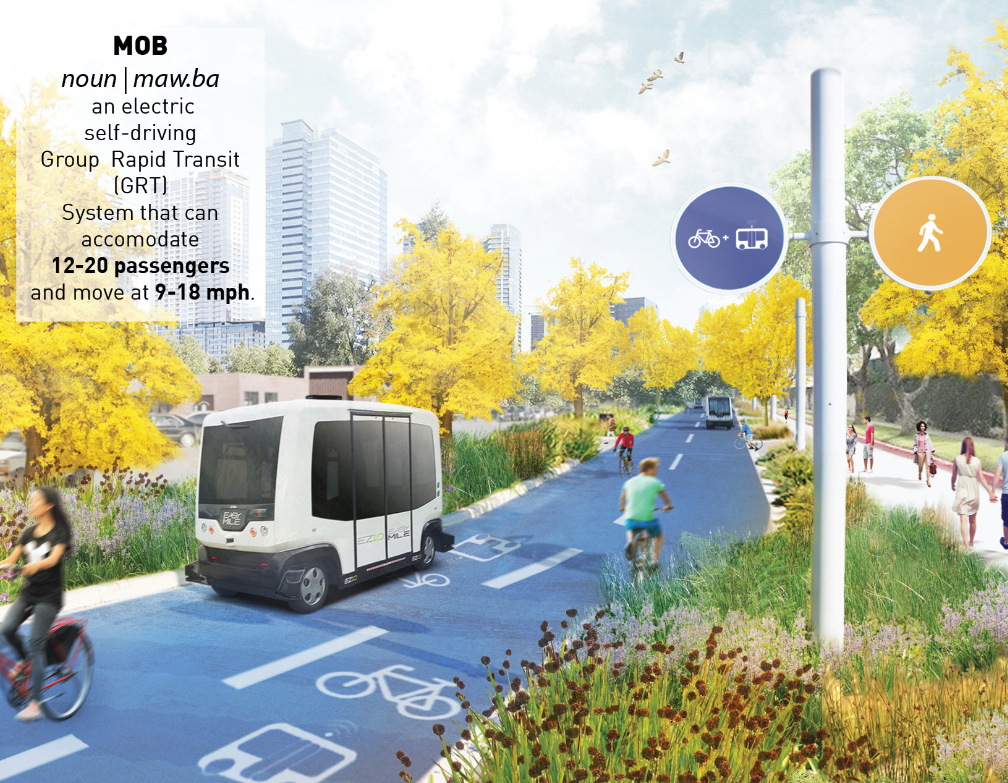
In this context, MIC-HUB has identified and developed a strategic plan and solutions that embrace a range of future scenarios to improve pedestrian-oriented mobility and connectivity.
Connecting people and communities also involves designing infrascapes that provide equal opportunities for people to move around, meet, and communicate.