Milano Central Station Pedestrian Simulation
Milan

Milan Central Station, managed by Grandi Stazioni Retail, is the second busiest railway station in Italy and is one of the country’s most important transport hubs with approximately 145 million visitors per year.
Around 75% of users are travellers, while the remaining 25% includes accompanying persons or people accessing the station’s retail and service facilities. On a typical weekday, the station handles approximately 740 train arrivals and departures in a highly complex spatial and functional environment.
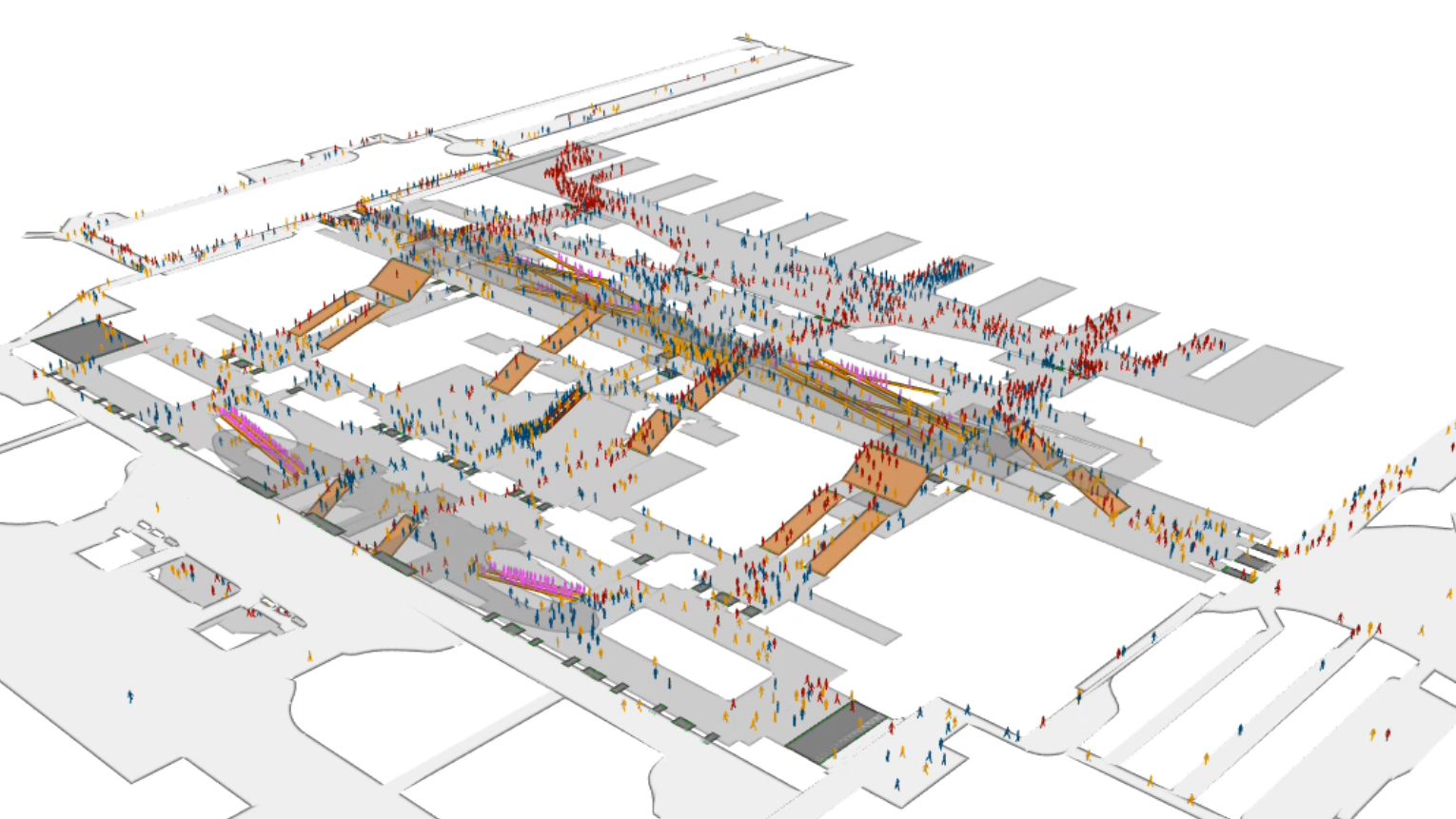
On behalf of One Works, MIC-HUB developed a dynamic pedestrian simulation model using MassMotion, a state-of-the-art pedestrian simulation software capable of modelling large crowds in a 3D environment.
Location
Milan
Client
Oneworks
Main expertise
Pedestrian Modelling;
PROJECT HIGHLIGHTS
- Dynamic pedestrian simulation of the station to study how people move and interact within the space, as well as any issues affecting its usability, such as congestion and queues
- Study to enhance the passenger experience in all circumstances
Project gallery
Our contribution
The project involved developing a simulation model to evaluate the overall performance of Milan Central Station, focusing on the expansion of the underground level and the reorganisation of the vertical connection system.
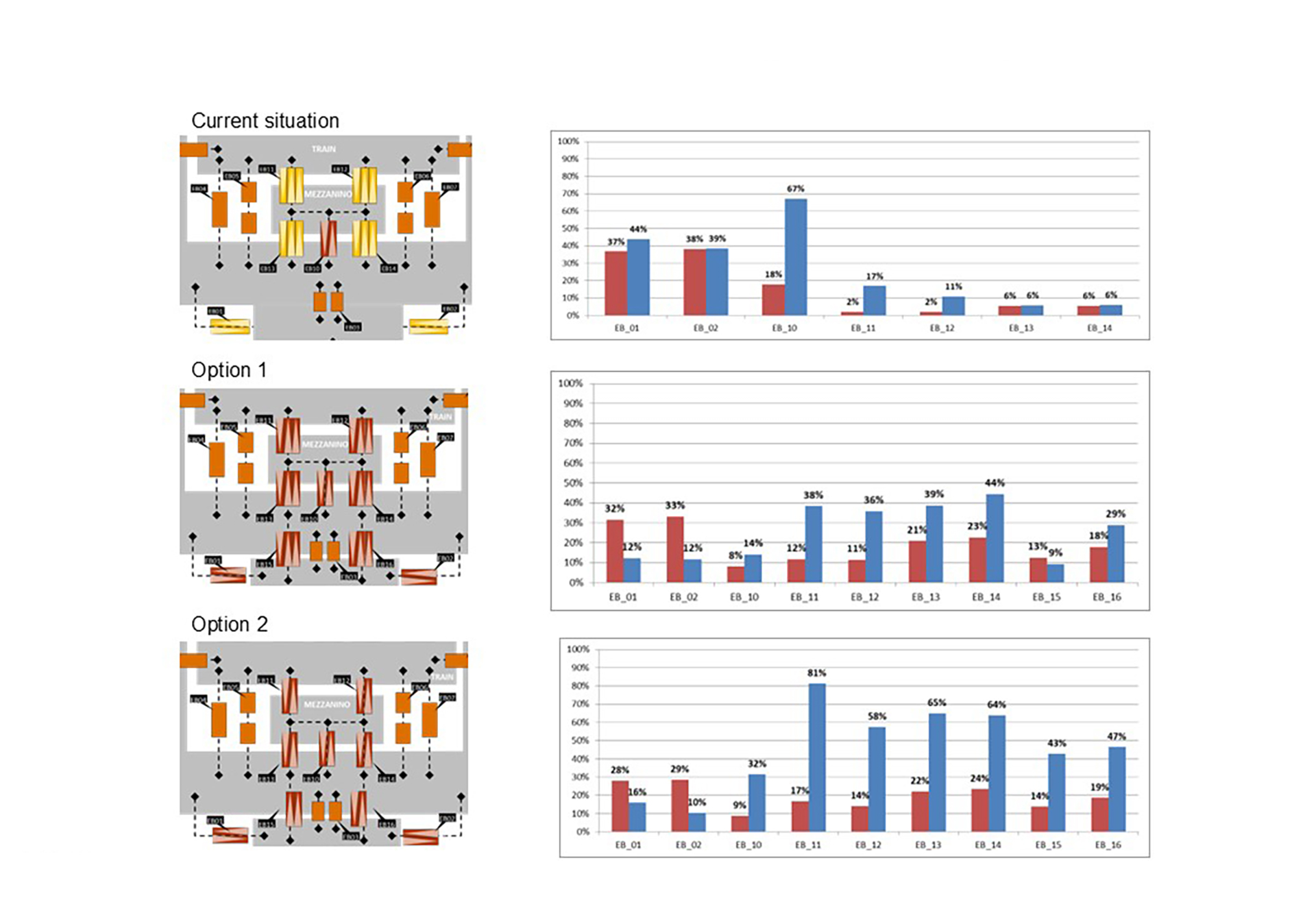
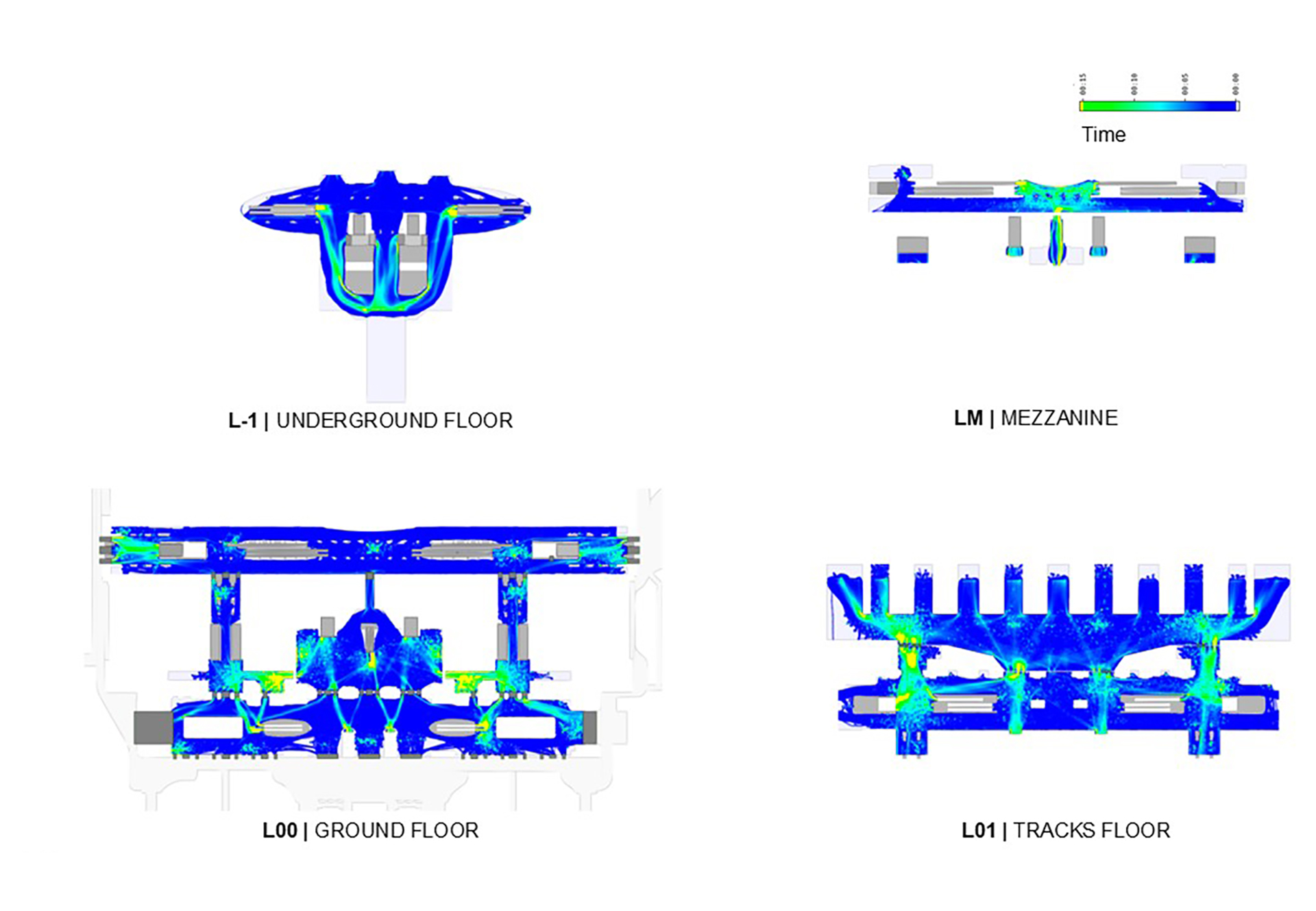
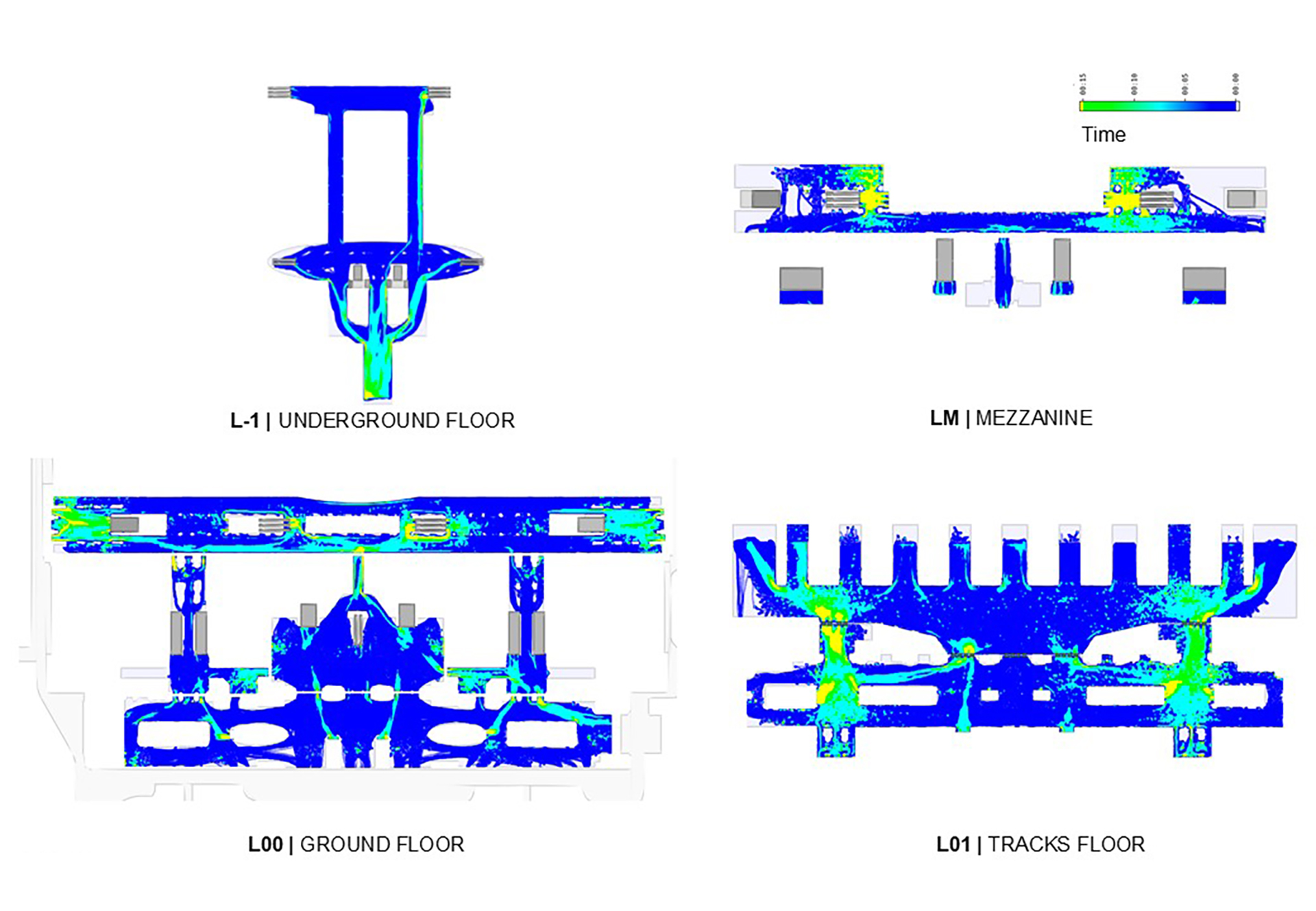
The pedestrian simulation modelled the existing conditions and the proposed reconfiguration project across two design variants, optimising pedestrian flows and space efficiency.
The simulation results were analysed through multiple outputs:
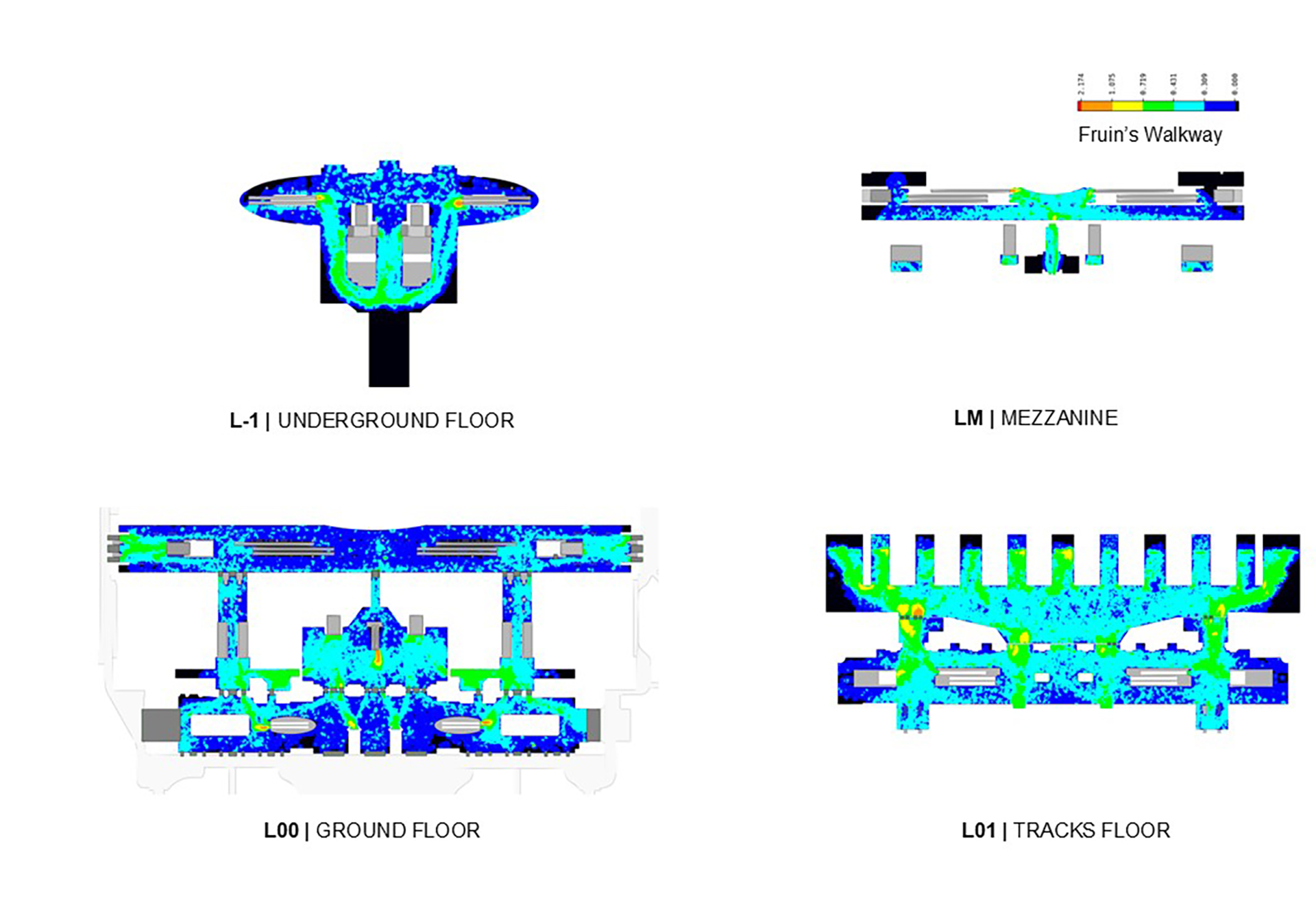
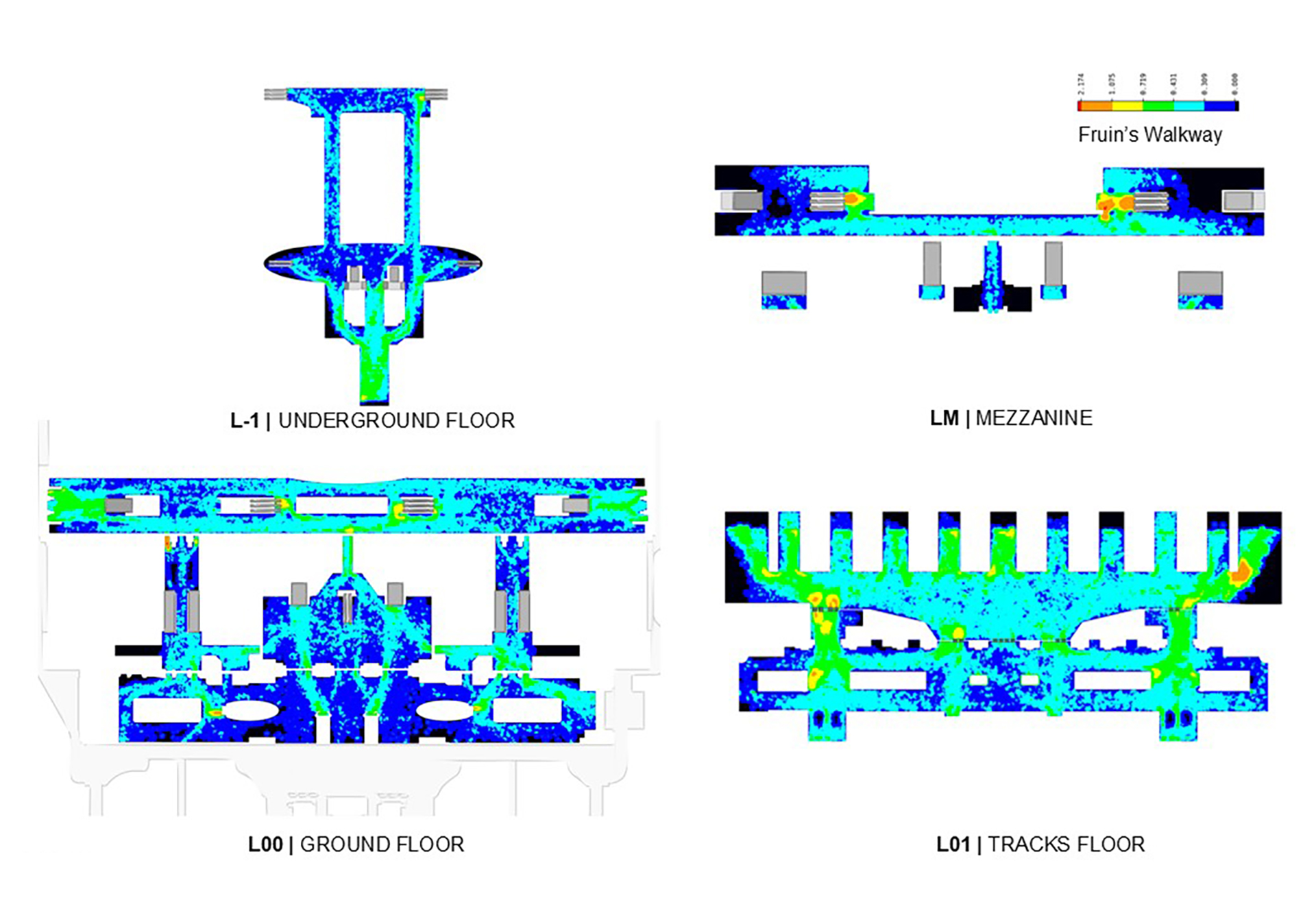
• Density maps – Level of Service (LOS), measuring the average perceived density levels experienced;
• Space utilisation maps, showing how long people occupied specific areas;
• Charts and tables, providing quantitative outputs from the simulations, enabling analytical verification of the usage levels of the vertical circulation banks;
• Videos, dynamically visualising movement and navigation within the simulated environment.
This approach supported an evidence-based evaluation of the proposed design solutions, enhancing spatial efficiency, accessibility and overall station performance, as well as supporting design decisions through a quantitative, data-driven approach.