Redevelopment of the former Neca area, Pavia
Pavia

MIC-HUB is part of the team responsible for redeveloping the former Neca industrial area in Pavia.
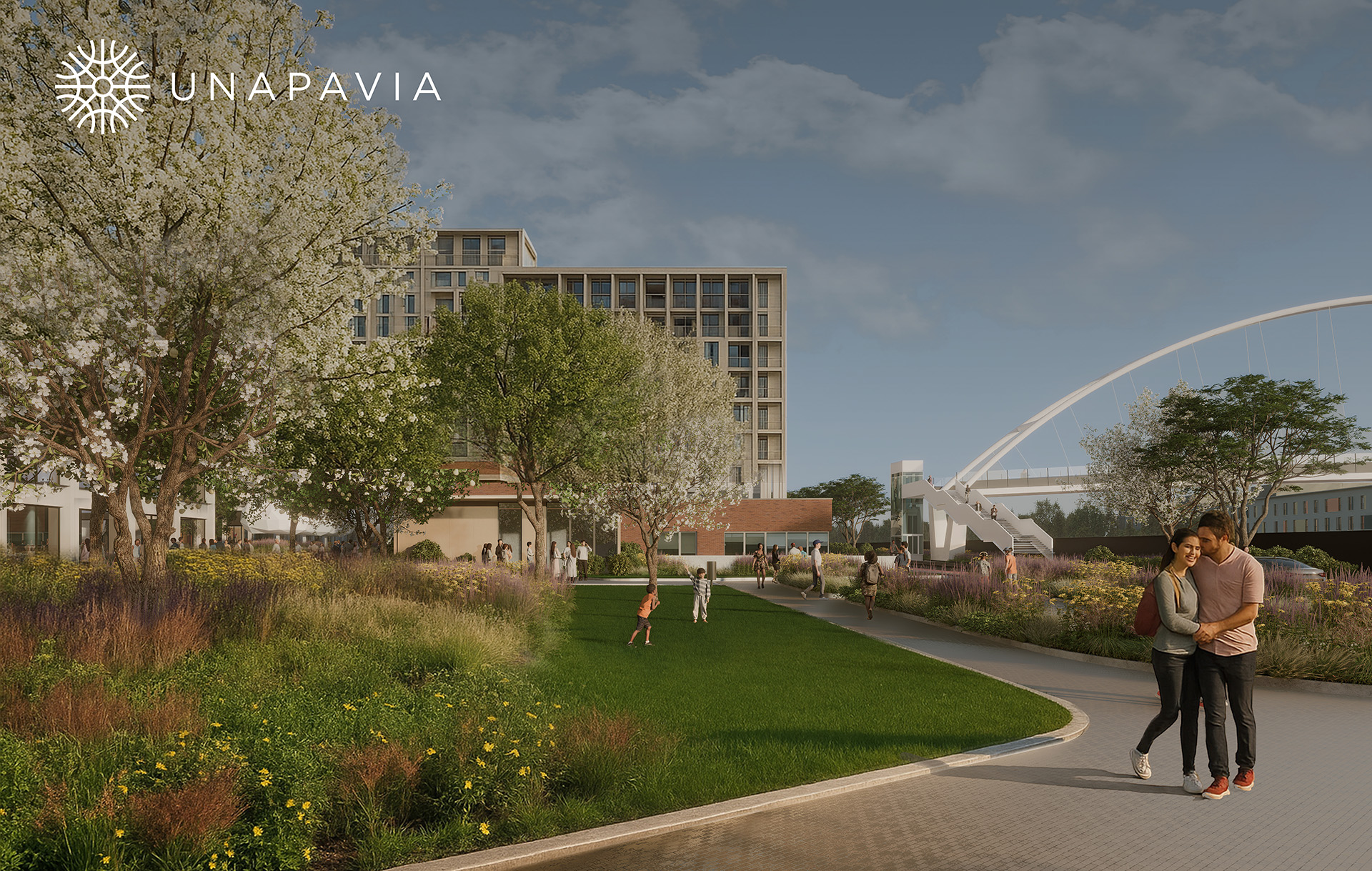
Through the UnaPavia project, the abandoned area will be transformed into a new, sustainable and accessible urban space that is integrated with the surrounding territory.
The masterplan includes:
• a new university campus for 500 students;
• two new parks, public spaces, squares, residences, social housing, hotels, and spaces for the tertiary sector, offering a mix of life-enhancing functions;
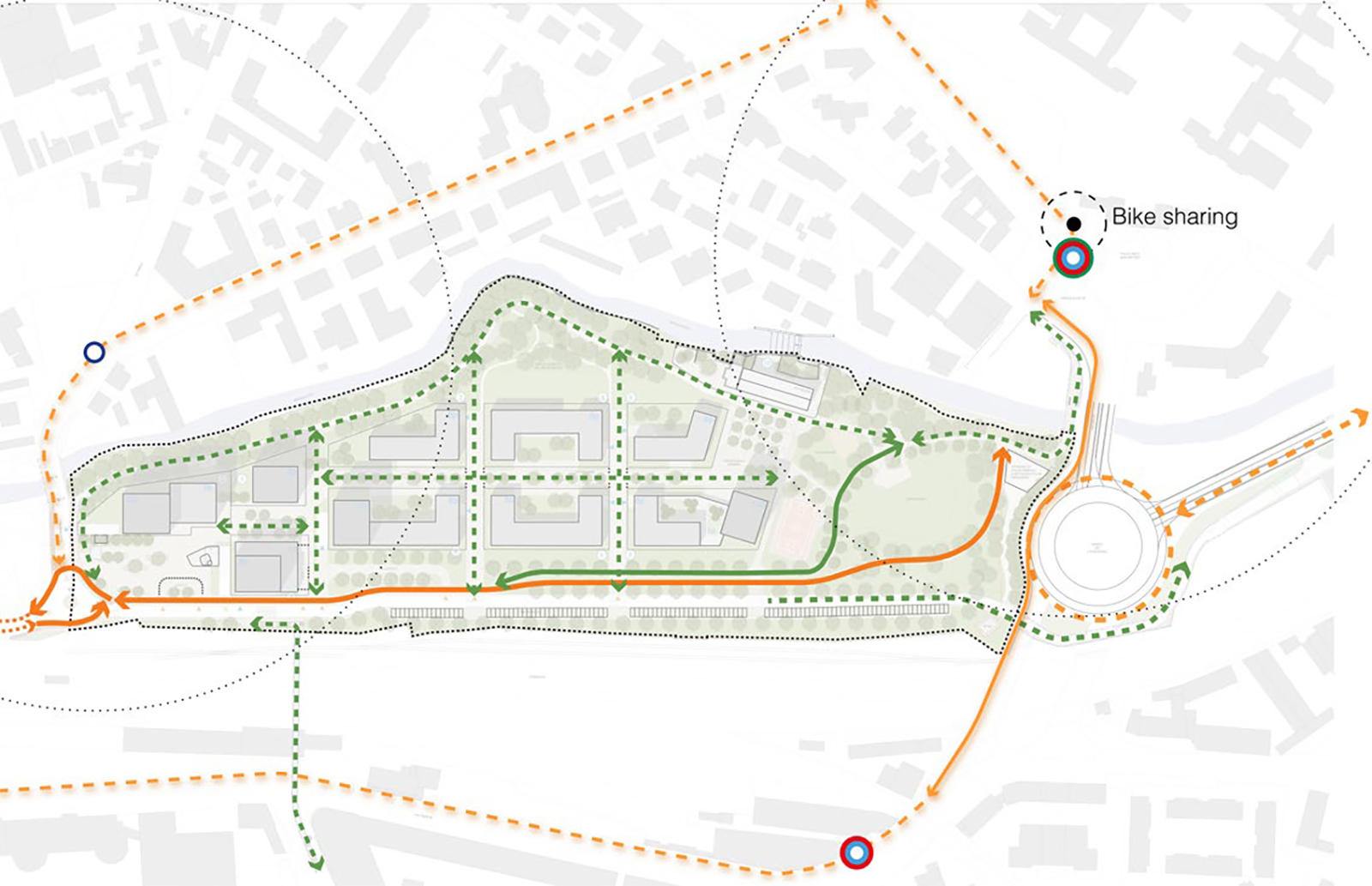
• a promenade integrated with the new cycle and pedestrian network, which will connect the entire area, as well as a cycle and pedestrian bridge that will resolve an important urban fracture caused by the railway;
• other works to improve accessibility for pedestrians, cyclists and cars are also planned.
The urban planning agreement, signed in July 2025, is a crucial step towards realising one of the city of Pavia's most significant urban regeneration projects.
UnaPavia is the result of collaboration between the Monte di Lombardia Foundation, the Municipality of Pavia, Redo SGR Società Benefit, and the technical partners: Studio Calvi Beam, Paola Delmonte, Perelli Consulting, MAB Arquitectura, MIC-HUB and GAE Engineering Srl.
Location
Pavia
Client
REDO
Main expertise
Pedestrian and Cycle Studies; Transport and Traffic Modelling
PROJECT HIGHLIGHTS
- Creation of a large car-free district and an underground park-and-ride facility
- Study of cycle and pedestrian connections within the master plan.
- Micro-analytical model analysis with Sidra Intersection tool
- Assessment of the performance of road junctions and network capacity
Project gallery
Our contribution
MIC-HUB supported Redo SGR and the design team in developing the masterplan for the area. This involved creating strategies related to sustainable mobility, a parking study and a micro-modelling traffic study to verify and optimise the planned changes to the road network.
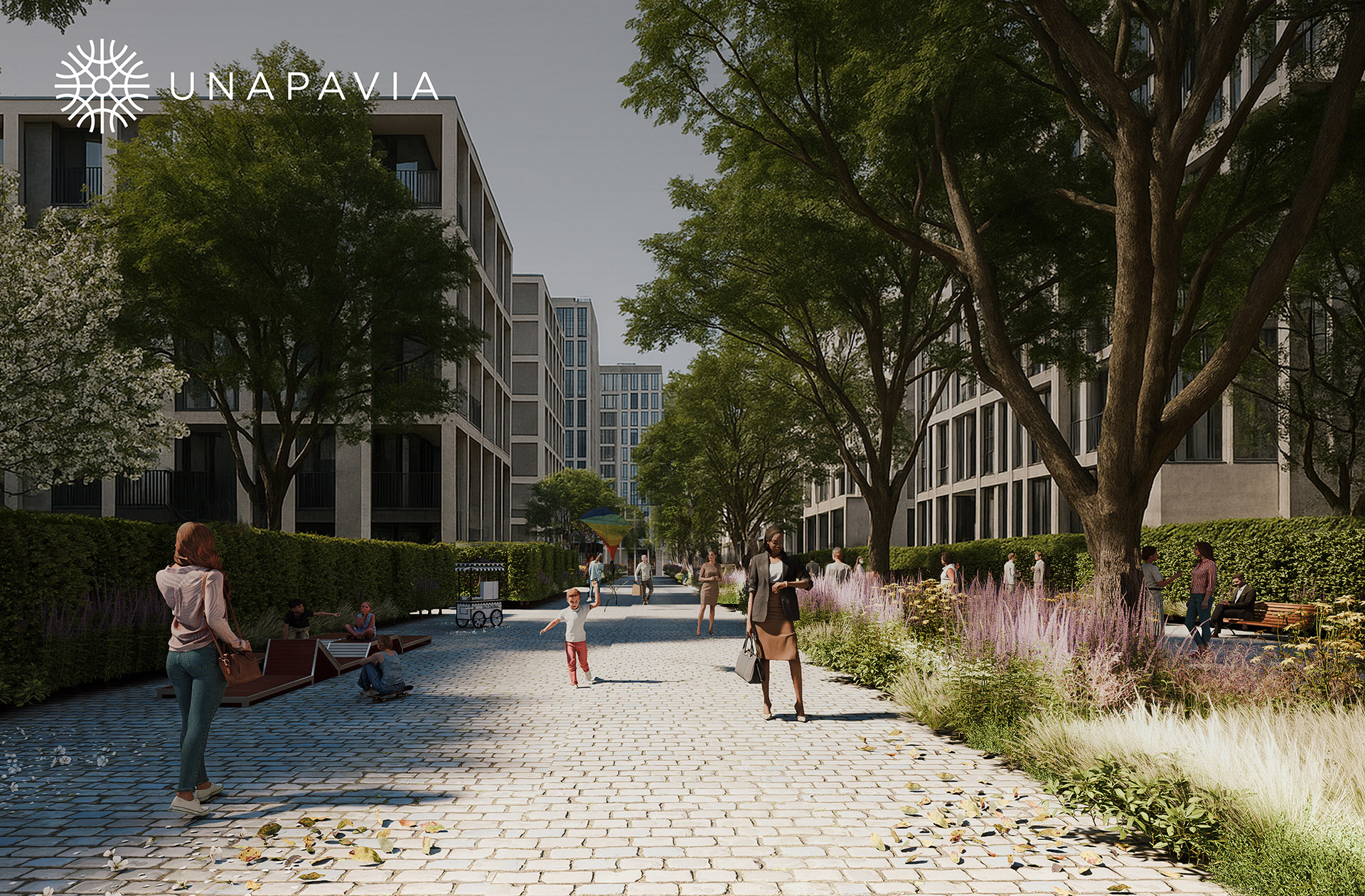
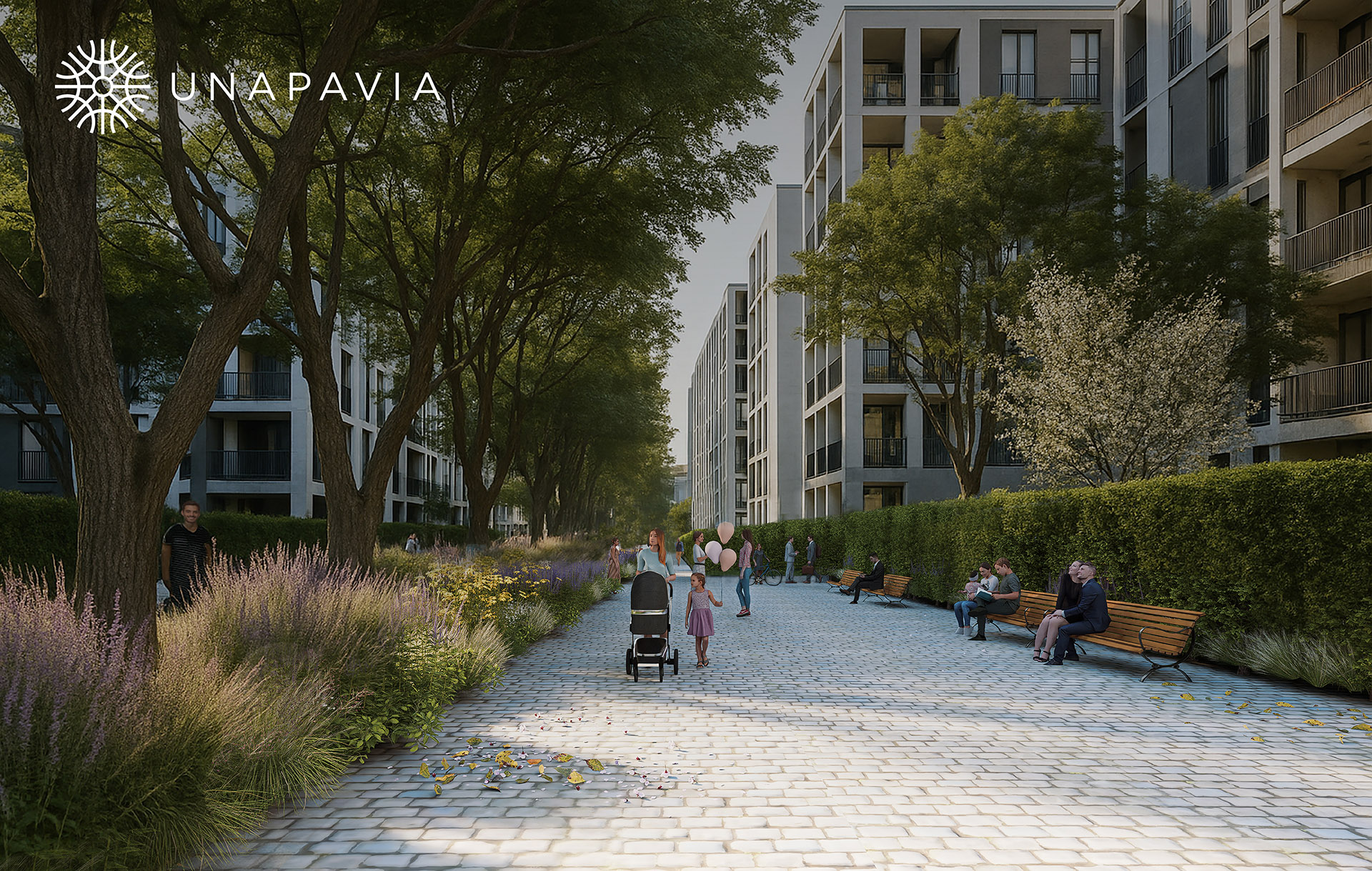
The masterplan aims to improve pedestrian circulation and promote accessible and sustainable urban mobility. The development of plots along the central boulevard is intended to enliven the public space by incorporating urban-scale buildings and a large park to the north, which will serve as a major attractor for visitors and residents alike.
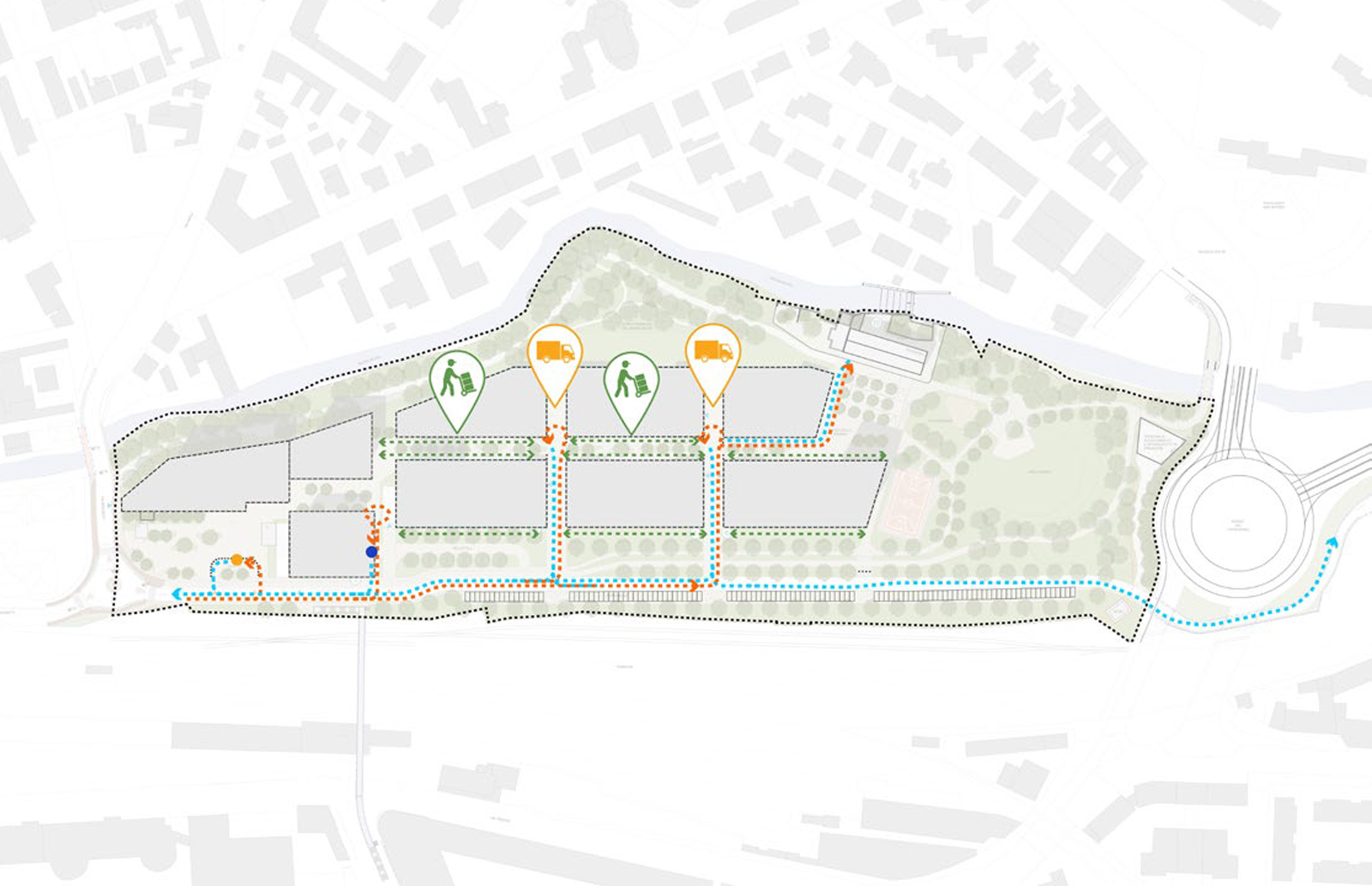
The servicing strategy focuses on minimising vehicle presence and circulation within the area.
The traffic plan is designed, in fact, to prevent vehicular circulation within the internal spaces of the masterplan, allowing for the free movement of pedestrians in the central area. In order to reduce traffic and pollution, vehicular access will be restricted to residents only, thereby improving the urban quality of the public spaces.
The redevelopment of the former Neca area exemplifies how urban planning can address the needs of sustainable mobility and improve the quality of life.